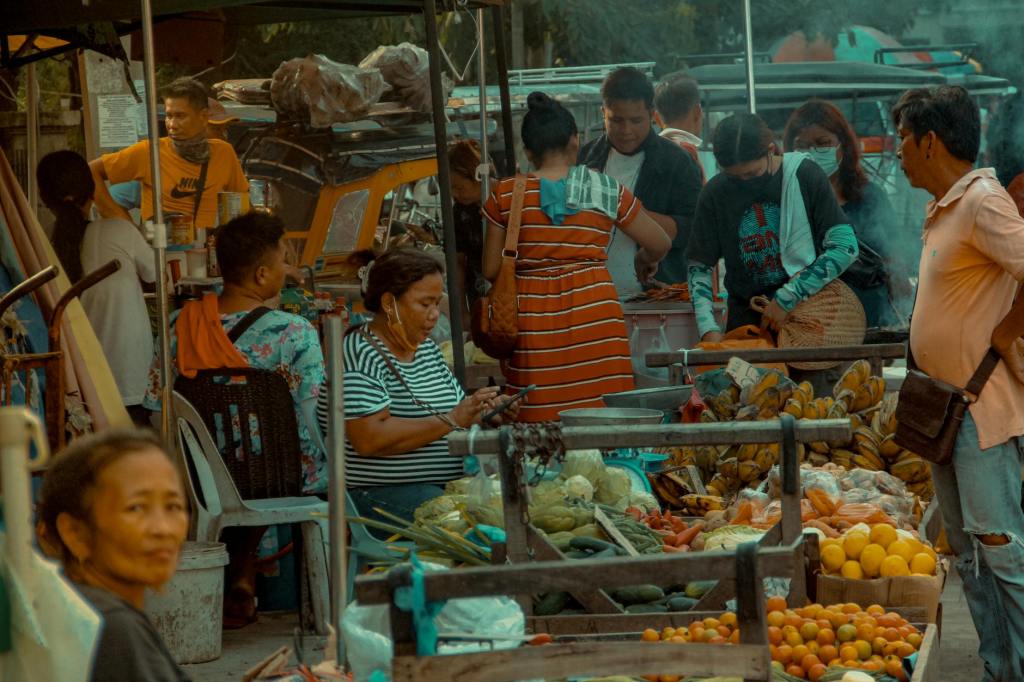
There is a strange feeling in Bicol today: sige an abot kan ayuda pero magabat pa giraray ang pamuhay-buhay (Aid keeps coming, but life still feels heavier).
Farmers receive cash assistance. Government agencies announce programs. Relief and recovery packages are distributed. From afar, it may look like help is moving. But inside many households, the question remains painfully simple: Despite the aid, why does life still feel more expensive?
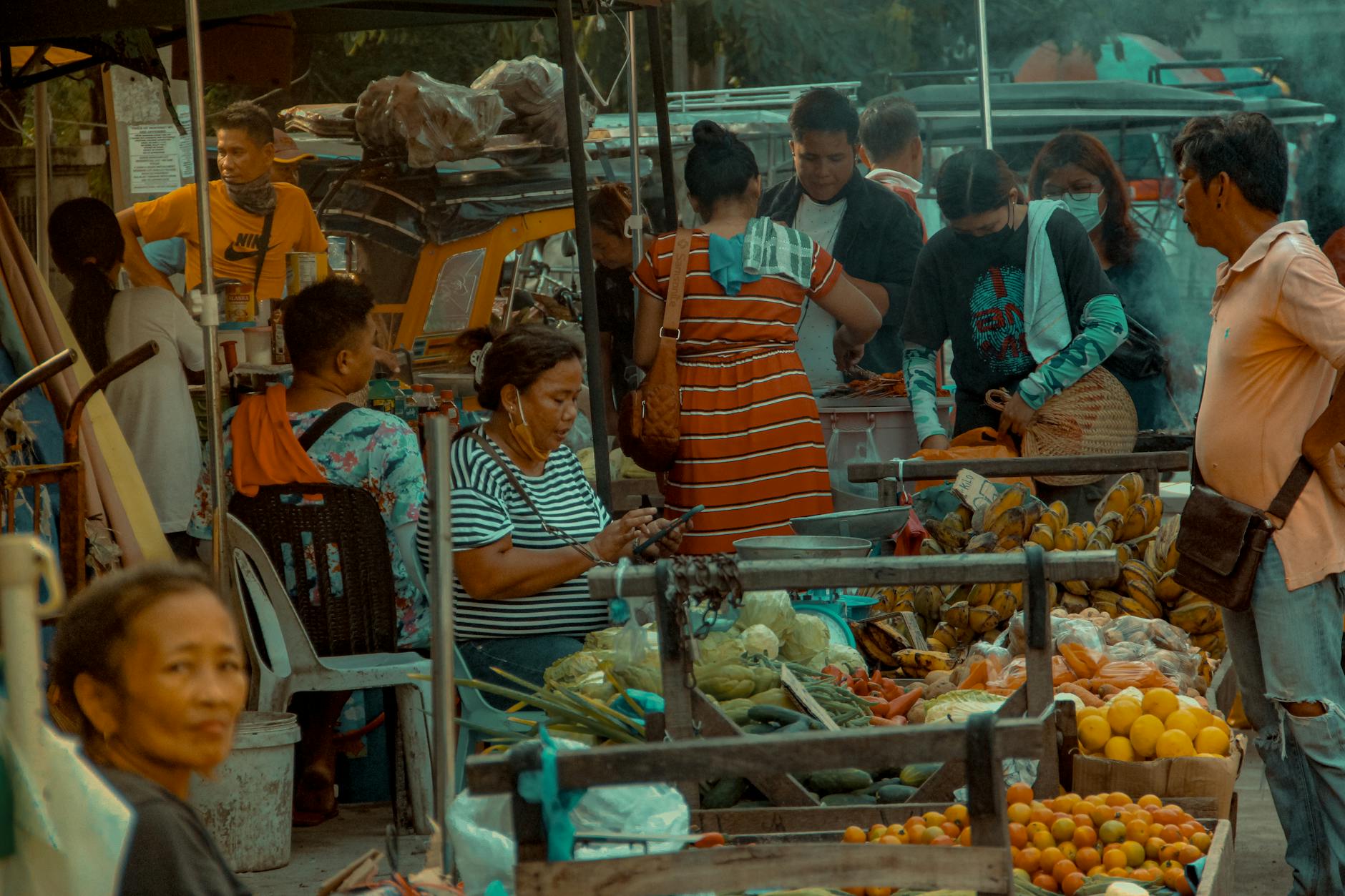
The answer is not that the aid is useless. For many families, it helps. It pays for food, seeds, fertilizer, school needs, medicine, or debt that cannot wait. But ayuda is often like an umbrella in a storm. Useful, yes. Necessary, yes. But it does not stop the rain.
And in Bicol, the rain is not just one problem. It is inflation, weak economic growth, farm losses, unstable income, transport costs, and repeated disasters all arriving like unwanted visitors in the same house.
In 2025, the Bicol economy grew by only 0.5 percent. That is not growth that people can feel. That is growth that looks alive on paper but is almost sleeping on the ground. For a region with many poor families, many farmers, many workers in informal jobs, and many communities exposed to typhoons, floods, landslides, and volcanic hazards, 0.5 percent growth is not enough to lift people. It barely gives them space to breathe.
Then came 2026 with a harder punch: prices went up. Bicol inflation climbed to 7.6 percent in April 2026, from 4.1 percent in March. In plain household language, that means the same money bought less food, less fuel, less pamasahe, less medicine, less everything. The wallet did not shrink physically, but its power did.
This is why many Bicolanos feel poorer even when assistance is being distributed. Aid may add money to the pocket, but inflation quietly takes money away from the same pocket.
That is the cruel math of daily survival.
For example, a farmer who receives assistance may use it to buy basic needs. But if food prices, transport fares, fuel costs, and farm inputs are rising at the same time, the assistance is quickly absorbed. It enters the household like relief, then exits through the market, the sari-sari store, the tricycle terminal, the pharmacy, the lender, or the rice dealer.
So people ask: Hain na an ayuda?
The better question is: Why is the system like Bato, making ayuda disappear so fast?
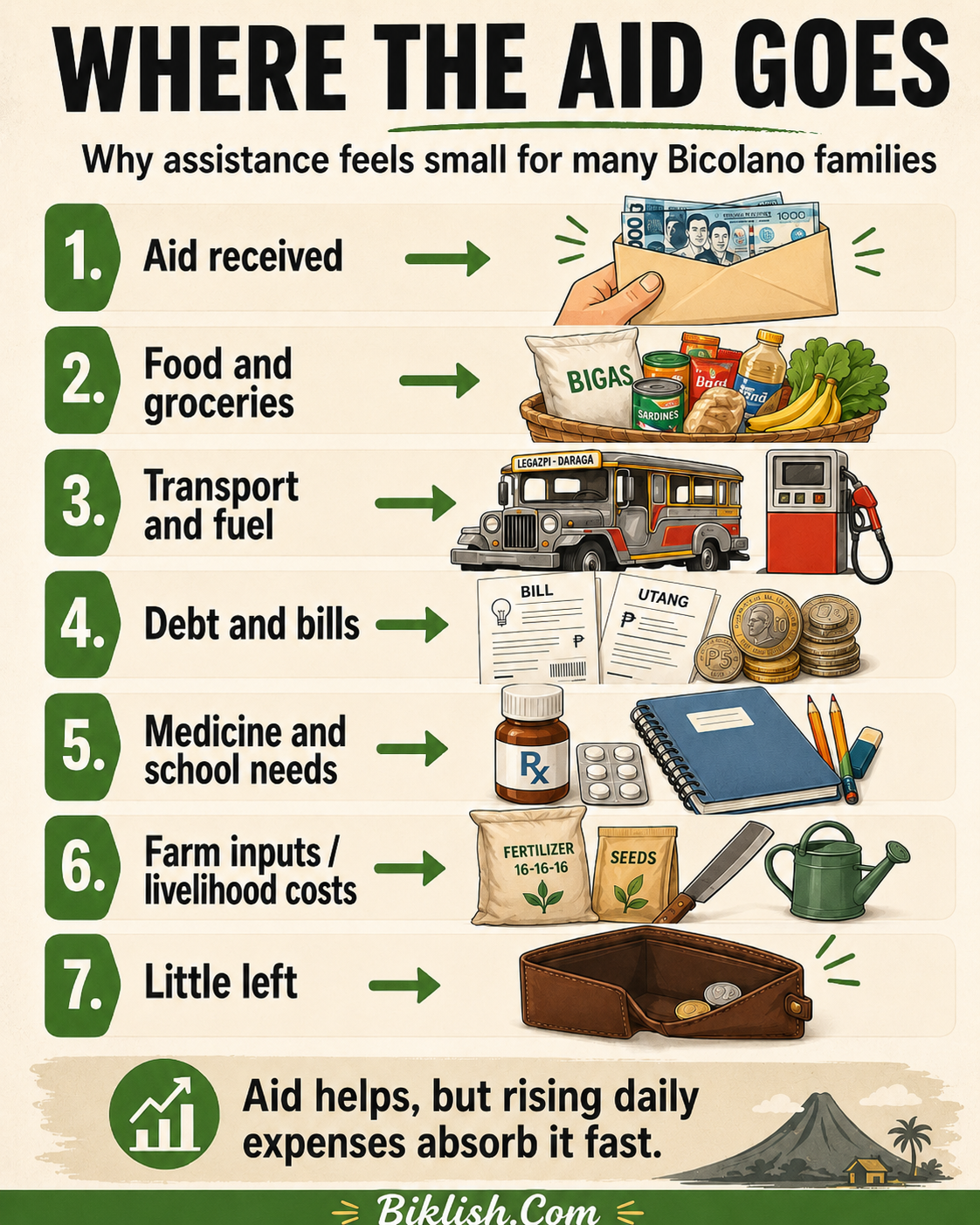
The problem is not only the amount of aid. The problem is the economic environment where aid lands. If a household receives help but has no stable income, no protection from price shocks, no reliable farm productivity, and no affordable transport, then aid becomes a temporary patch. It does not become a pathway out of poverty.
This is especially true for farmers.
More than 129,000 Bicol farmers reportedly received over ₱300 million in presidential assistance. That sounds big, and it is. But when divided across thousands of beneficiaries and placed against the scale of agricultural risks in the region, the amount becomes less like transformation and more like emergency breathing space.
And Bicol farmers need breathing space because they are always one shock away from starting over.
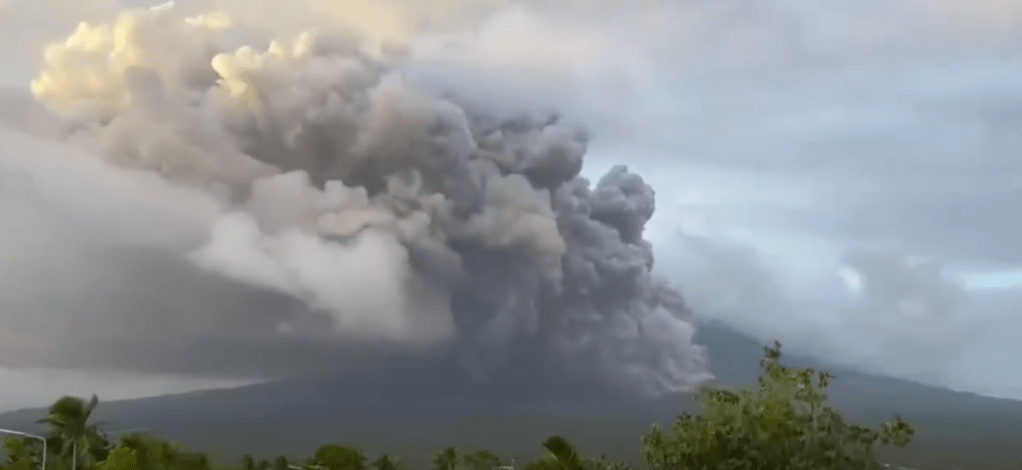
A dry spell can damage crops. Too much rain can destroy crops. A typhoon can erase months of labor overnight. Mayon ashfall can bury vegetables, damage rice and corn, affect livestock, and force families to spend more just to recover. In Albay, agricultural losses from Mayon ashfall reached tens of millions of pesos. That is not just a number. That is income lost before it even reached the table.
This is the Bicol paradox: we celebrate resilience, but many communities are being forced to be resilient again and again because the systems around them remain fragile.
Resilience should not mean, “Kaya pa nindo, tiisin ta muna.”
Resilience should mean fewer families are pushed back to zero every time disaster strikes.
The bigger issue is that Bicol’s economy is not creating enough buffers for ordinary people. If growth is slow, jobs are weak. If jobs are weak, incomes remain thin. If incomes are thin, inflation hurts more. If inflation hurts more, ayuda gets swallowed faster. If ayuda gets swallowed faster, people feel abandoned even when government says help is being provided.
That is why a press release about aid and a PSA report about inflation should not be read separately. They belong to the same story.
One tells us government is giving help.
The other tells us why people still feel helpless.
For ordinary Bicolanos, the economy is not measured by gross regional domestic product. It is measured by the price of rice, fish, cooking oil, fare to work, electricity, tuition, medicine, fertilizer, and the ability to survive until the next payday or harvest.
When prices rise faster than income, people feel poorer.
When growth is too slow to create better jobs, people feel poorer.
When farmers need aid every season because disasters keep damaging crops, people feel poorer.
When families receive assistance but still borrow money after a week, people feel poorer.
This is not just a poverty story. It is a governance story.
Ayuda is important, especially during emergencies. But if the region depends on ayuda as its main answer to hardship, then Bicol will keep treating symptoms while the illness gets worse. The region does not only need relief. It needs stronger local economies, better farm support systems, more reliable infrastructure, cheaper and more efficient transport, climate-resilient agriculture, and local governments that can connect social protection with long-term livelihood and investment strategies.
In short: ayuda must not be the end of the story. It should be the bridge to something better.
For farmers, this means not just cash assistance after damage, but stronger crop insurance, better irrigation, resilient seeds, farm-to-market roads, post-harvest facilities, direct market linkages, and real protection from middlemen and price volatility.
For workers, this means not just temporary jobs or one-time support, but local industries that create decent work outside election season, construction season, or disaster recovery season.
For families, this means not just food packs or cash transfers, but communities where basic services are predictable, livelihoods are stable, and public spending actually reduces daily vulnerability.
For local governments, this means going beyond distribution photos. The real test is not how many checks were handed over. The real test is whether fewer people will need the same emergency assistance next year.
That is the hard question Bicol must ask: Are we building recovery, or are we building dependency?
Because there is a difference.
Recovery helps people stand again. Dependency makes them wait again.
And Bicolanos deserve more than waiting.
They deserve an economy where effort is rewarded, where farming is not a gamble against the weather, where prices do not erase every small gain, and where government help becomes a ladder—not a recurring bandage.
So yes, aid keeps coming. But many Bicolanos still feel poorer because the cost of living is moving faster than the help, faster than wages, faster than farm income, and faster than the region’s economic growth.
Until that changes, the story will repeat itself:
May ayuda.
May press release.
May photo opportunity.
But in many homes, the same question remains:
“Paano kita mabubuhay hanggang sa sunod na bulan?”
That is the real Bicol Buzz. Not the announcement of aid, but the anxiety that survives after the aid is spent.




Leave a comment