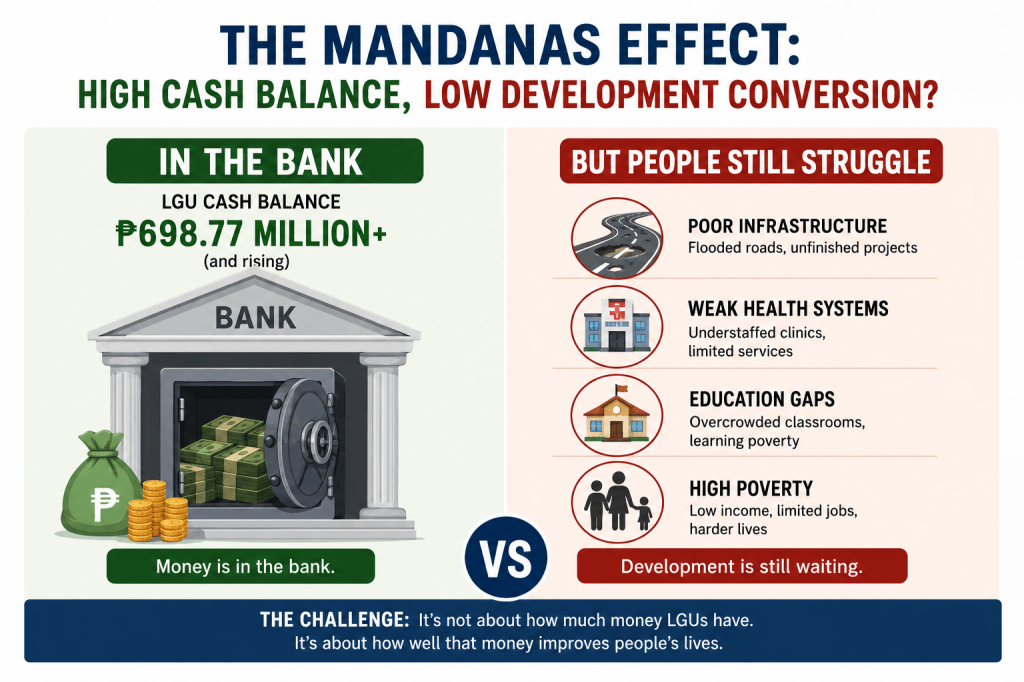
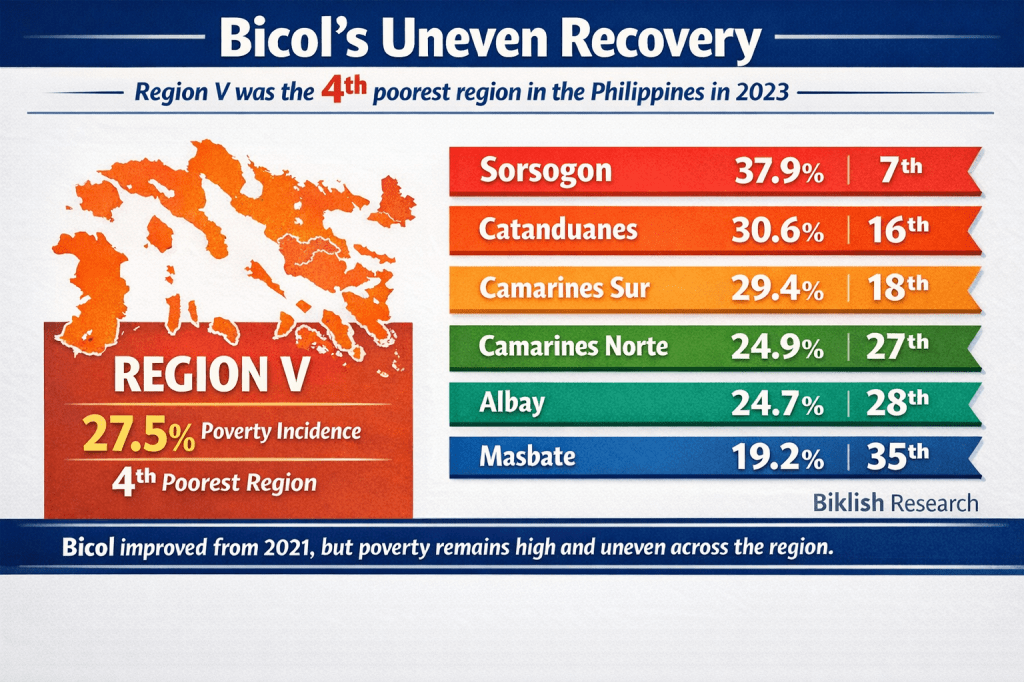
The Bureau of Local Government Finance (BLGF) has officially released the Statement of Receipts and Expenditures (SRE) of local government units for Fiscal Year 2025, providing a complete financial diagnostic of all 107 municipalities in the Bicol Region. The numbers look impressive.
Across the Bicol Region, municipalities are sitting on cash reserves once unimaginable in local government. Some towns have crossed the ₱500-million mark in year-end balances. Others now hold more liquidity than small cities.
For many local officials, this signals a new era of fiscal strength.
In many ways, they’re right.
But behind the celebration of swollen municipal bank accounts lies a quieter, more uncomfortable question: What happens when local governments become better at accumulating money than turning it into development?
The Great Fiscal Flood
The Mandanas-Garcia Supreme Court Ruling fundamentally rewired local government finances in the Philippines.
For decades, LGUs bore growing responsibilities — health services, agriculture, social welfare, infrastructure — without the resources to match. Mandanas changed the equation. Municipalities began receiving dramatically larger National Tax Allotment shares, sometimes faster than their planning and procurement systems could handle.
The result was a fiscal flood.
The old problem — Where do we get the money? — gave way to a harder one: Can we actually govern this much money effectively?
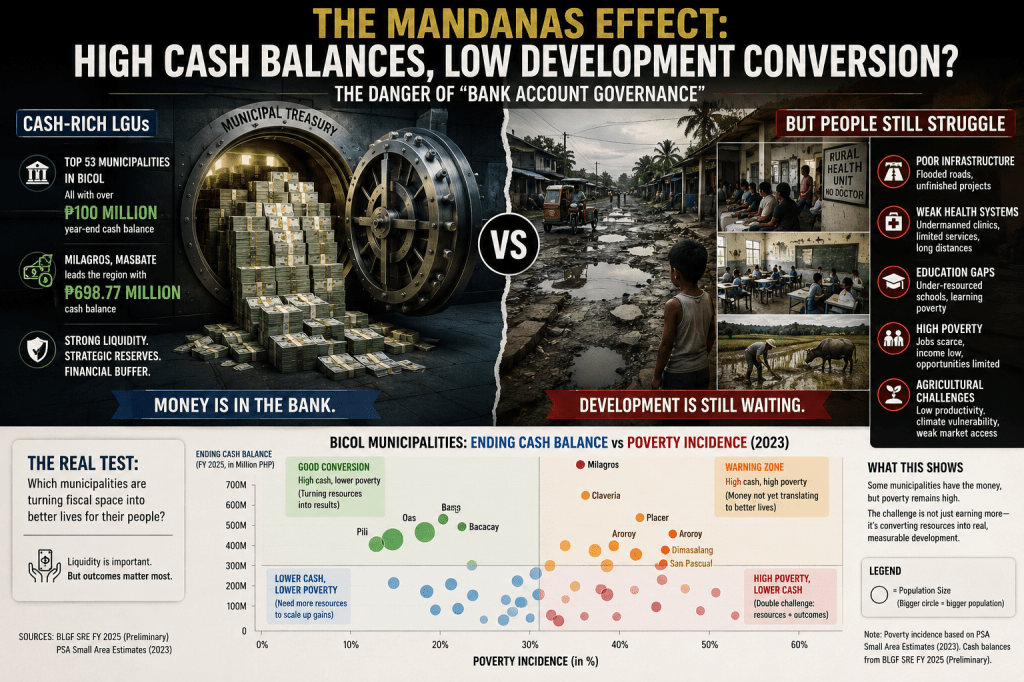
The Rise of “Bank Account Governance”
A quiet and dangerous culture is taking root in some local governments: governance by accumulation.
In this model, success is measured by large cash balances, conservative spending, and delayed implementation. The treasury looks healthy. Audit risks shrink. Bank accounts grow.
But roads stay unfinished. Flooding persists. Hospitals remain understaffed. Agricultural productivity stagnates. Young people keep leaving.
Money accumulates. Development waits.
This is Bank Account Governance — a system where preserving liquidity becomes politically safer than pursuing meaningful change.
Why This Happens
The incentives aren’t hard to understand.
Aggressive spending invites scrutiny. Procurement missteps can trigger investigations. Failed projects become political liabilities. COA findings can end careers.
So many LGUs retreat into caution. Instead of acting like engines of development, they behave like careful treasurers. Better to delay than risk a mistake. Better to hold funds than invite controversy.
The painful irony: some municipalities are now fiscally rich but developmentally timid.
Rich LGU, Poor People
The contradiction is becoming harder to ignore.
A municipality may sit on ₱500 million in reserves — and still have high poverty rates, malnutrition, weak health systems, low farm productivity, and few jobs.
Because money alone does not create development. Development requires institutional capacity, strategic planning, technical competence, and political courage. Without these, cash simply sits in financial statements while social problems remain stubbornly alive.
The danger is that local governments begin celebrating fiscal accumulation without asking the only question that really matters: Are people’s lives actually improving?
The Illusion of Fiscal Independence
Large cash balances can create a false sense of security.
Many municipalities with impressive reserves still derive the overwhelming majority of their revenues from national transfers — not from local businesses, productive industries, tourism, or property taxes. A big bank balance built on NTA dependence is not the same as a strong local economy.
True fiscal resilience means having a productive economy, a diversified revenue base, and the capacity to generate local wealth. Without these, a municipality risks becoming financially inflated but economically fragile.
The Developmental State vs. The Passive Treasury
The Mandanas ruling created an opening for municipalities to evolve into genuine local developmental institutions.
LGUs now have the fiscal power to modernize agriculture, invest in infrastructure, launch economic enterprises, build climate resilience, digitize services, and improve health outcomes. Some are already doing this.
But others remain passive — waiting, preserving, delaying, accumulating.
The gap between future winners and laggards may no longer come down to money. It may come down to conversion capacity: the ability to turn fiscal space into real human development.
The Next Governance Question
For decades, the central debate in Philippine local governance was about scarcity.
That debate is shifting.
The real question now is: What happens when LGUs finally have money — but still struggle to create change?
The next generation of governance shouldn’t be measured by balances, surpluses, or liquidity alone. It should be measured by whether public funds translate into lower poverty, better schools, stronger healthcare, resilient communities, and a higher quality of life.
Citizens don’t live inside municipal bank accounts.
They live in roads, schools, hospitals, farms, and neighborhoods.
And no amount of liquidity can substitute for development that people can actually feel.






Leave a comment