Vic: Welcome to the Bicol Region, where the economy grows by half a percent and somehow that counts as news worth celebrating.
Liz: Biklish.Com has been tracking what that number actually means for households in Bicol — the gap between aid announcements and the daily arithmetic of survival, and why the region’s recovery looks so different depending on where you stand.
Vic: Two angles, one very stubborn problem. Let’s start with why the help keeps coming but the heaviness stays.
Why Aid Alone Cannot Lift Bicol
Liz: The central question here is one that a lot of Bicolanos are living right now: if assistance is being distributed, why does daily life still feel like it costs more than it should?
Vic: The post frames it this way: “Aid may add money to the pocket, but inflation quietly takes money away from the same pocket.”
Liz: That is the cruel math the post keeps returning to. Bicol inflation hit 7.6 percent in April 2026, up from 4.1 percent the month before. So the same wallet buys less rice, less fuel, less medicine — the assistance enters the household and exits almost immediately through the market, the pharmacy, the tricycle terminal.
Vic: And the economy underneath all of this is not generating enough to cushion the fall. Regional growth was 0.5 percent in 2025 — barely a pulse.
Liz: Which is why the post argues that ayuda functions like an umbrella in a storm: useful, necessary, but it does not stop the rain. The rain in this case is inflation, weak growth, farm losses, repeated disasters, and unstable income all arriving at once.
Vic: The agricultural picture is especially bleak. More than 129,000 Bicol farmers reportedly received over 300 million pesos in presidential assistance — which sounds substantial until you spread it across the scale of risk these farmers face every season.
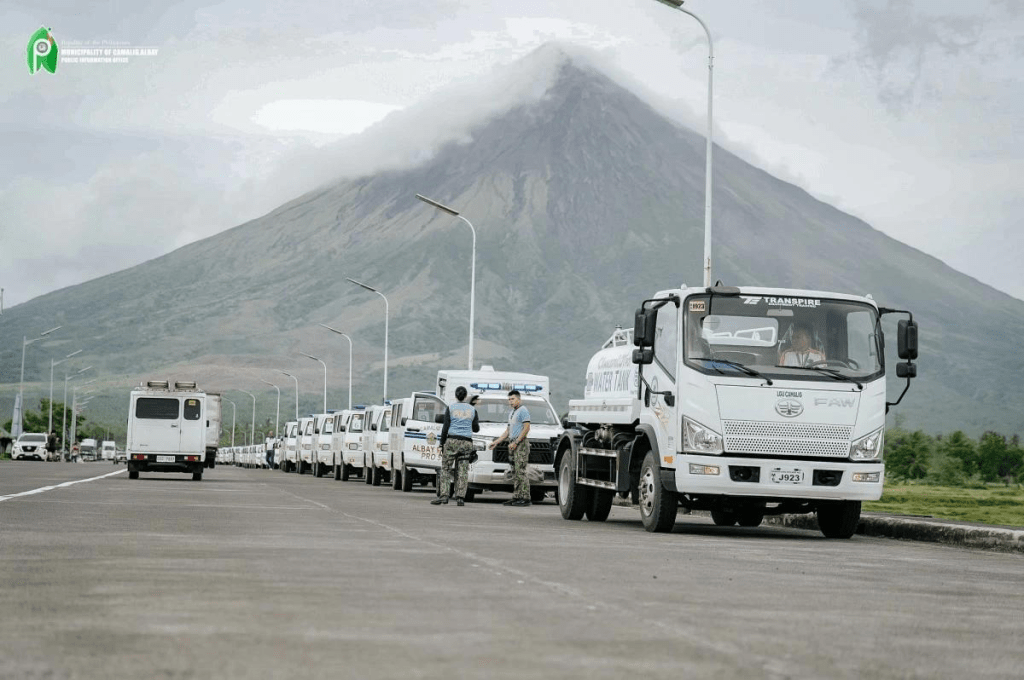
Liz: Mayon ashfall alone pushed agricultural losses in Albay into the tens of millions. One dry spell, one typhoon, one bad harvest — and months of labor disappear before it reaches the table.
Vic: So the post is really asking a governance question dressed up as a poverty question: are we building recovery, or are we building dependency?
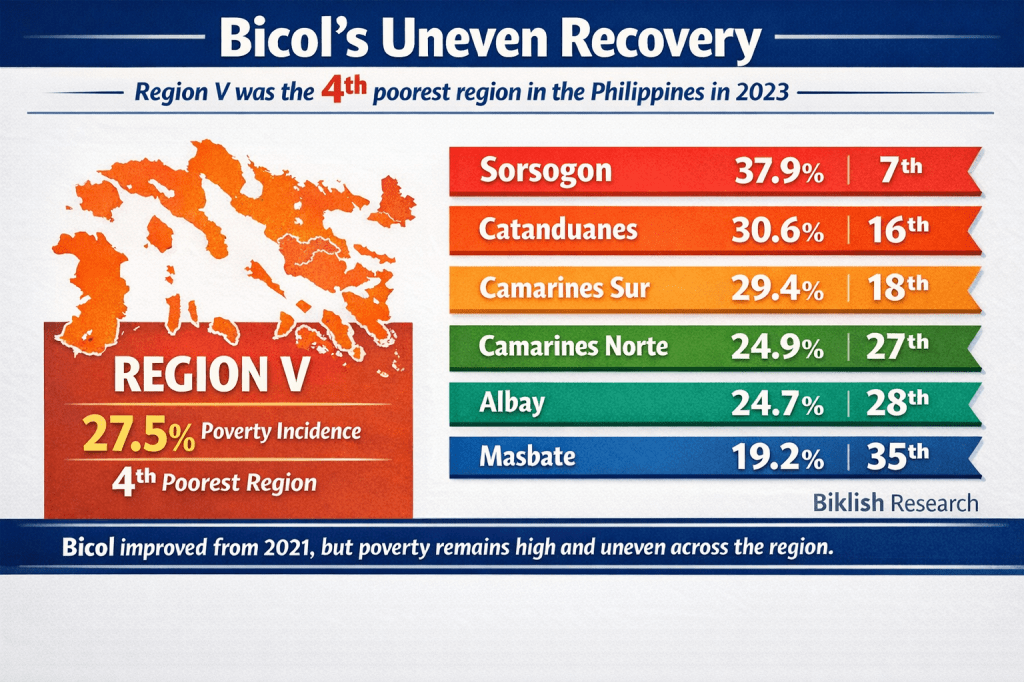
Liz: Exactly — and that question connects directly to the provincial data. The piece on Bicol’s uneven recovery shows that the region improved from 2021 to 2023 on paper, dropping from 29.3 to 27.5 percent poverty incidence, but that still left Region V as the fourth poorest in the country. Three provinces — Sorsogon, Catanduanes, and Camarines Sur — landed in the national top twenty for poverty incidence. Sorsogon alone jumped from 26.1 percent in 2018 to 37.9 percent in 2023.
Vic: That is not a slow recovery. That is a reversal.
Liz: And the poverty threshold data explains part of why households still feel squeezed even where the numbers technically improved. The annual per capita threshold climbed from roughly 24,000 pesos in 2018 to nearly 33,600 in 2023. Families needed significantly more money just to avoid being classified as poor.
Vic: The municipal numbers are even harder to sit with. Garchitorena in Camarines Sur at 44 percent. Caramoran in Catanduanes at 41 percent. Rapu-Rapu in Albay just under 40. These are places where four in ten residents are poor — the regional average of 27.5 percent does not capture that at all.
Liz: Urban centers like Naga at 10 percent and Daet at 12 percent pull the average up, but the pattern is clear: distance, isolation, weak infrastructure, and limited market access are doing as much damage as low incomes. Masbate, often assumed to be among the worst, actually posted the lowest provincial rate in the region at 19.2 percent — which tells you the data can still surprise.
Vic: The post puts it plainly: the region is not standing still, but it is not rising together either.
Liz: And until the structural conditions change — farm support, reliable infrastructure, climate-resilient agriculture, local industries that outlast election season — the cycle repeats. Aid arrives, inflation absorbs it, and the same question returns: how do we survive until next month?
Vic: Half a percent growth, 7.6 percent inflation, and a poverty map that looks completely different at the municipal level than it does from the regional average.
Liz: The numbers keep pointing at the same gap — between what gets announced and what gets felt. Worth watching how that gap moves in the next reporting period.






Leave a comment