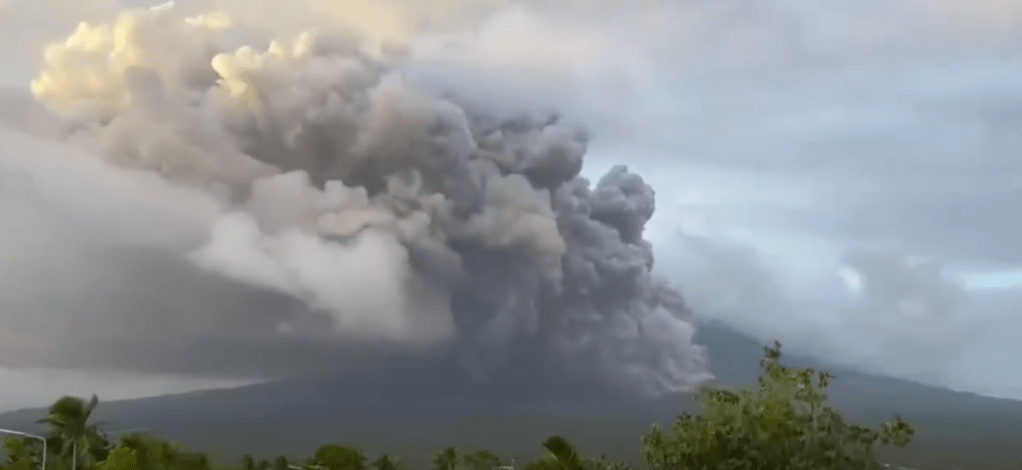
Mayon is Bicol’s postcard queen. But on May 3, she stopped posing and started warning.
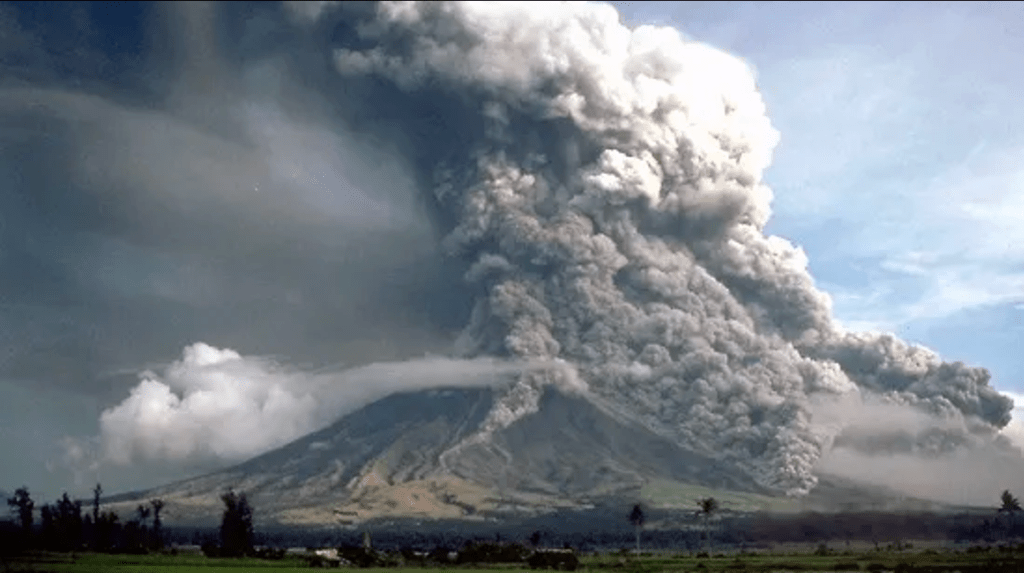
Heavy ashfall from Mayon hit 52 barangays in Albay, mostly in Guinobatan, Camalig, and Ligao City, after lava collapse and minor Strombolian activity generated rockfalls, ashfall, and pyroclastic density currents or uson. PHIVOLCS kept Mayon under Alert Level 3 which means the volcano remains in a high level of unrest, with danger from lava flows, rockfalls, PDCs, moderate explosions, and lahars during heavy rain.
In Guinobatan, ashfall was reported in 18 barangays, including Minto, Malabnig, Mapaco, Doña Tomasa, Agpay, San Rafael, Maguiron, Calzada, Iraya, Muladbucad Grande, Inamnan Pequeño, Inamnan Grande, Bubulusan, Lomacao, Maninila, Travesia, Lower Binogsacan, and Ilawod.
In Camalig, 17 barangays were affected, including Cabangan, Salugan, Anoling, Sua, Quirangay, Tumpa, Barangays 1 to 7, and parts of Libod, Ilawod, Gapo, and Sumlang. The same number of barangays experienced ashfall in Ligao City, including Busac, Allang, Palapas, Francia, Abella, Malama, Paulba, Maonon, Balanac, Tupas, Tiongson, San Vicente, Tandarura, Pandan, Bacong, Cabarian, Pinamaniquian, and Oma-Oma.
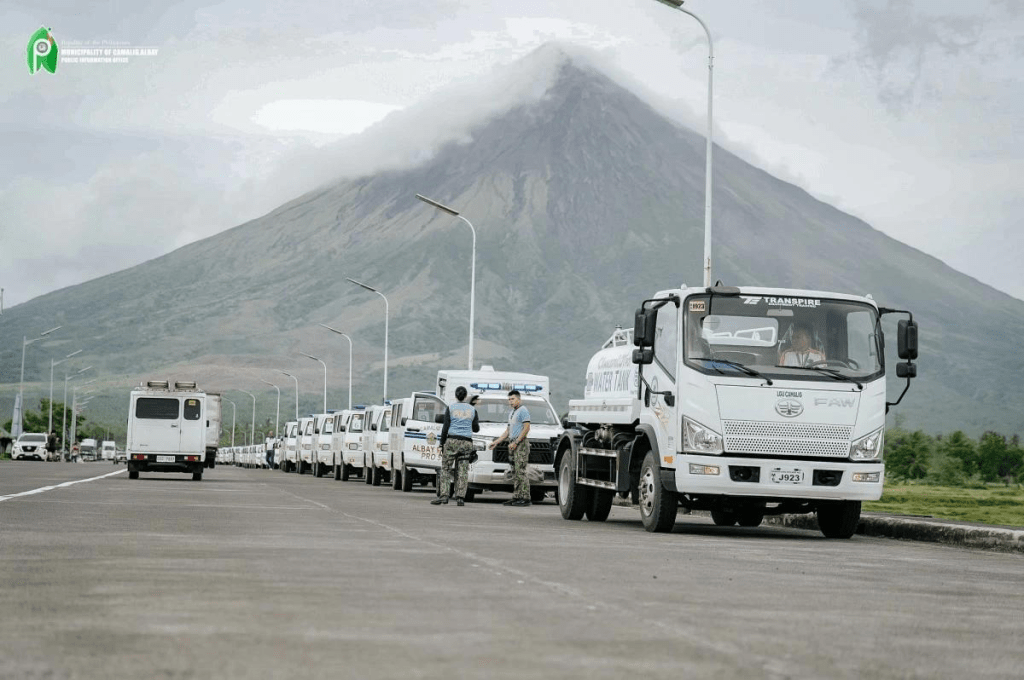
The damage assessment is still developing, but early figures already show the scale: reports cited more than 30,500 families affected, with around 1,500 families evacuated as authorities enforced the six-kilometer Permanent Danger Zone. DSWD support also moved in, including 59,153 family food packs, hot meals, hygiene kits, and 393 ready-to-eat food packs for residents of Barangay Anoling, Camalig.
On the volcano side, PHIVOLCS reported continued activity: 411 rockfall events, four PDC signals, five volcanic earthquakes, and sulfur dioxide emissions reaching 1,829 tonnes per day on May 3. Lava flows were also monitored along Mayon’s gullies. In plain Biklish: this was not just “nagbuga nin abo.” Mayon was actively moving hot volcanic material downslope.
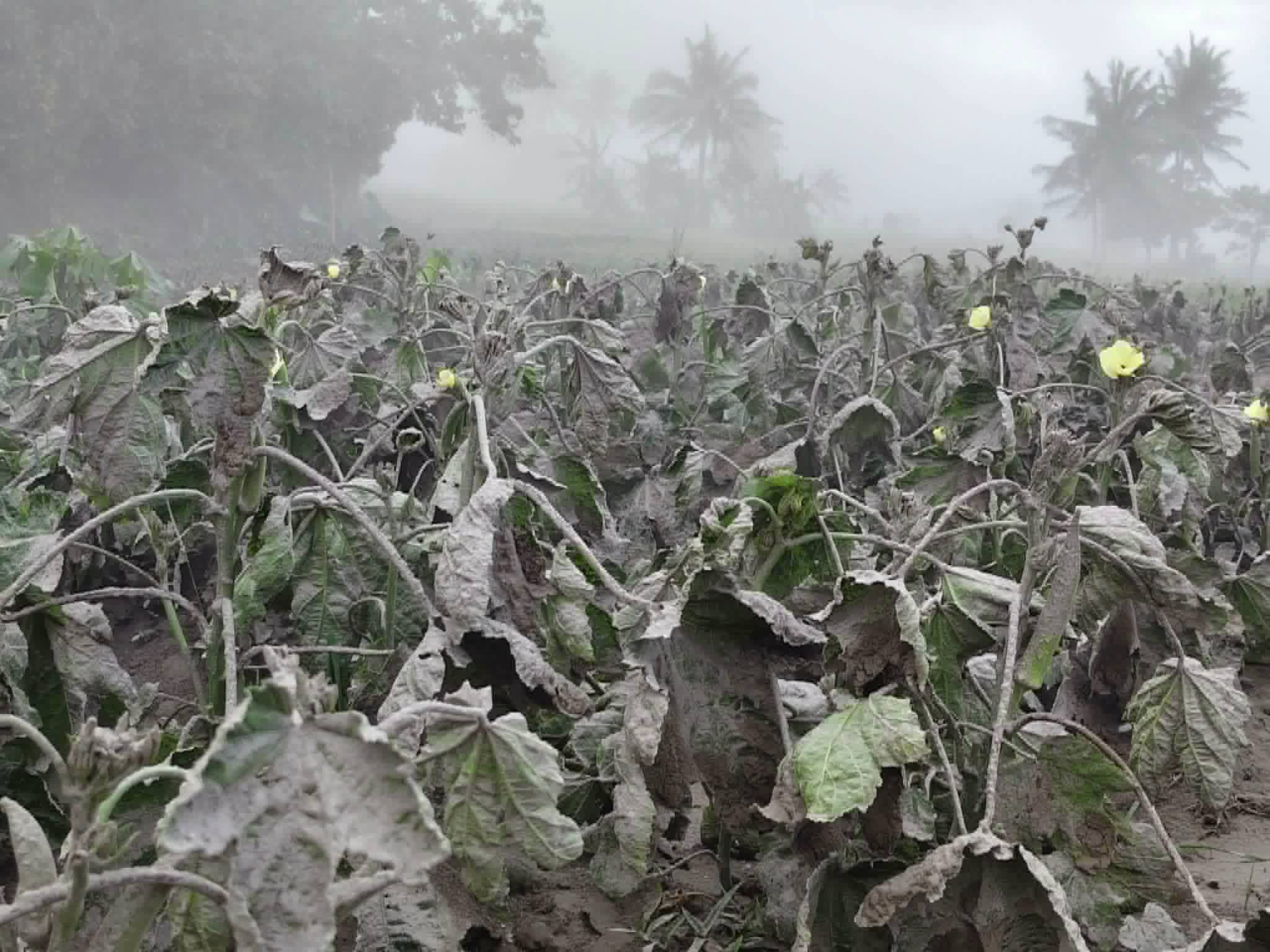
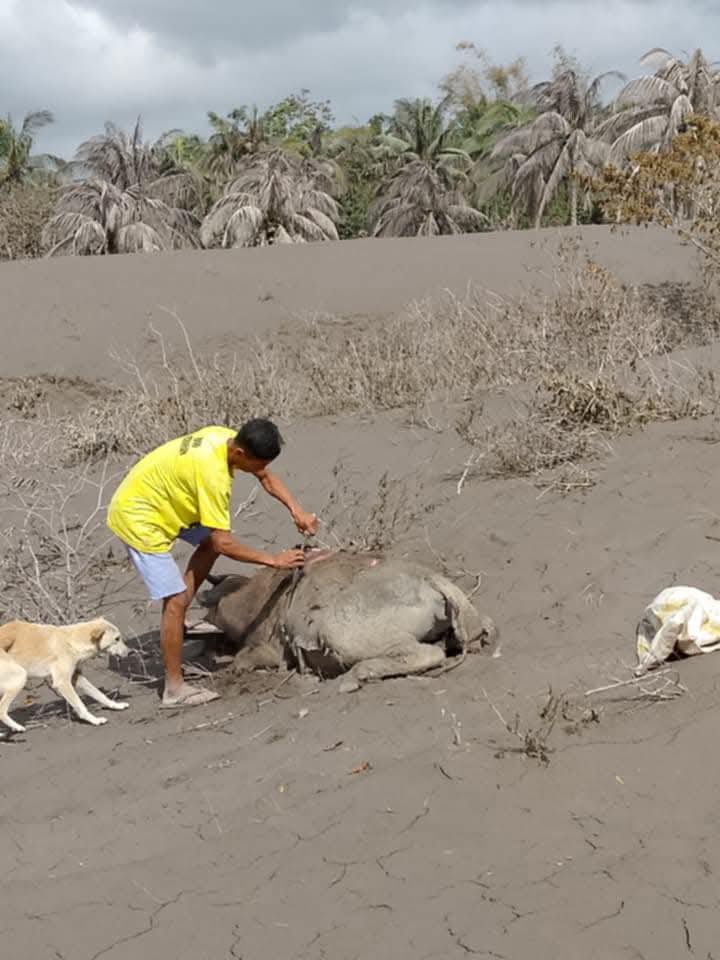
The visible damage is gray: roofs, roads, vehicles, crops, and communities covered in ash. But the real damage is deeper. Farmers in areas like Camalig, including Barangay Anoling, are facing crop losses from thick ashfall. A significant number of animals including carabaos and cows died. It is also feared that water sources may be contaminated. Travel was disrupted due to thick ash and mud. Classes were suspended in affected areas. Flights were also affected because of Mayon’s unrest.
This is why the danger zone matters. Uson cannot be outrun. Lahar does not ask permission before rushing down gullies when rain turns ash and debris into fast-moving mud. The six-kilometer Permanent Danger Zone is not a suggestion; it is a survival line.
Mayon will always be part of Albay’s pride. But this week, the real test is not her perfect cone. The test is whether warnings are followed, evacuees are supported, farmers are assisted, water is protected, and no one treats disaster as content for a selfie.
When Mayon turns Albay gray, the ash is not just dust.
It is a warning.





Leave a comment