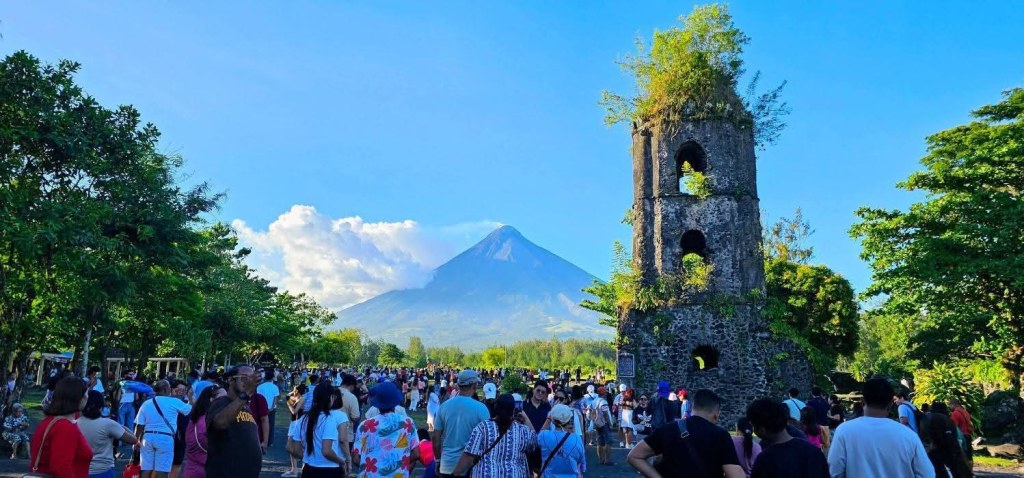
DARAGA, Albay — Tourism at the historic Cagsawa Ruins surged at the start of 2026, with 45,702 visitors recorded in January, according to local government data. Of this figure, 45,232 were domestic tourists while 470 were foreign guests, reflecting renewed interest in one of Bicol’s most iconic heritage sites—partly fueled by recent activity from nearby Mayon Volcano.
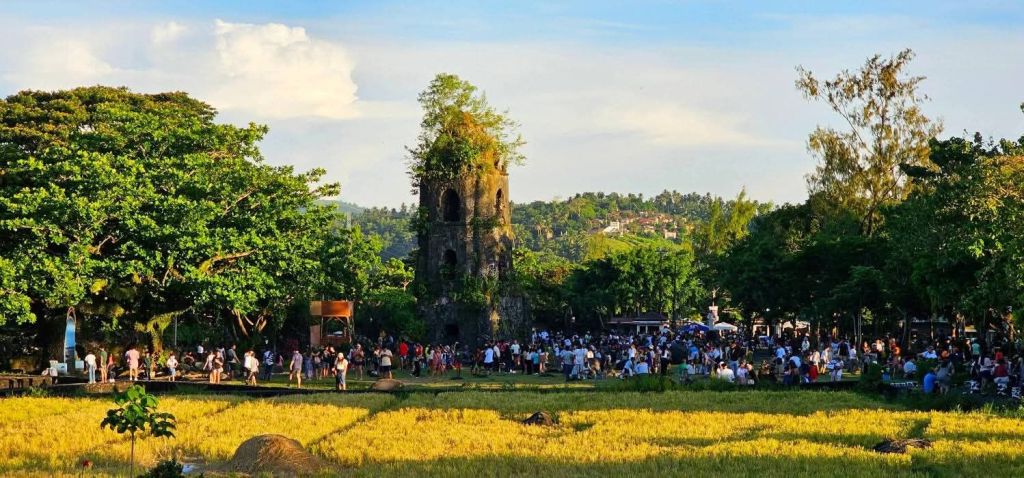
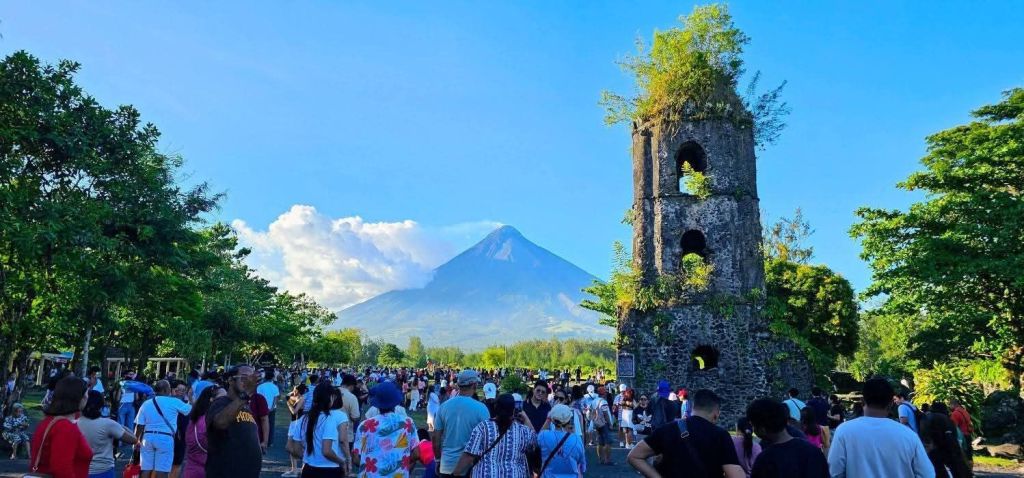
The steady flow of visitors mirrors scenes earlier in the month, when tourists were seen gathering at the centuries-old bell tower despite rainy weather, underscoring the site’s enduring draw for travelers seeking both history and dramatic volcanic scenery.
A Landmark Shaped by Catastrophe
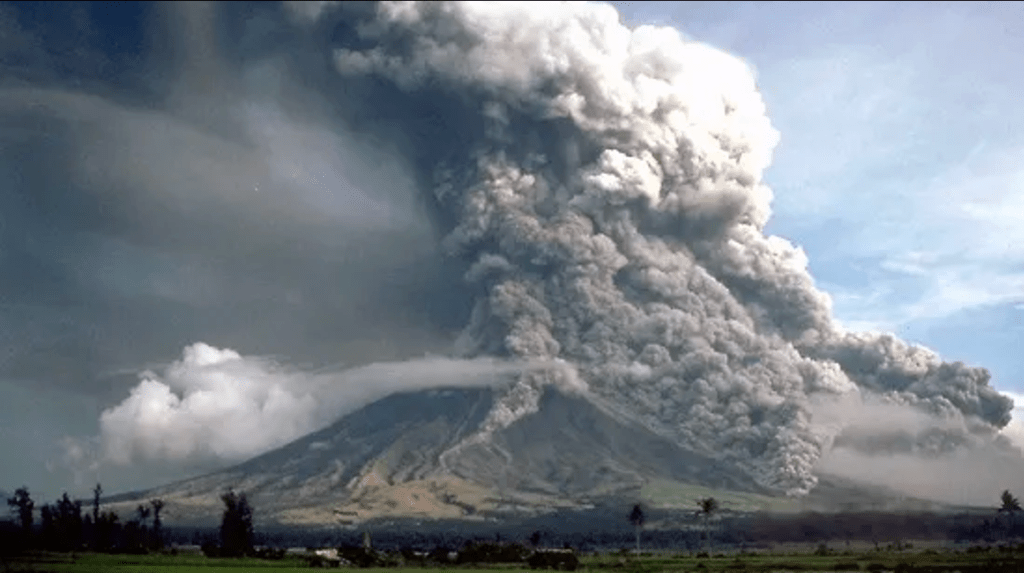
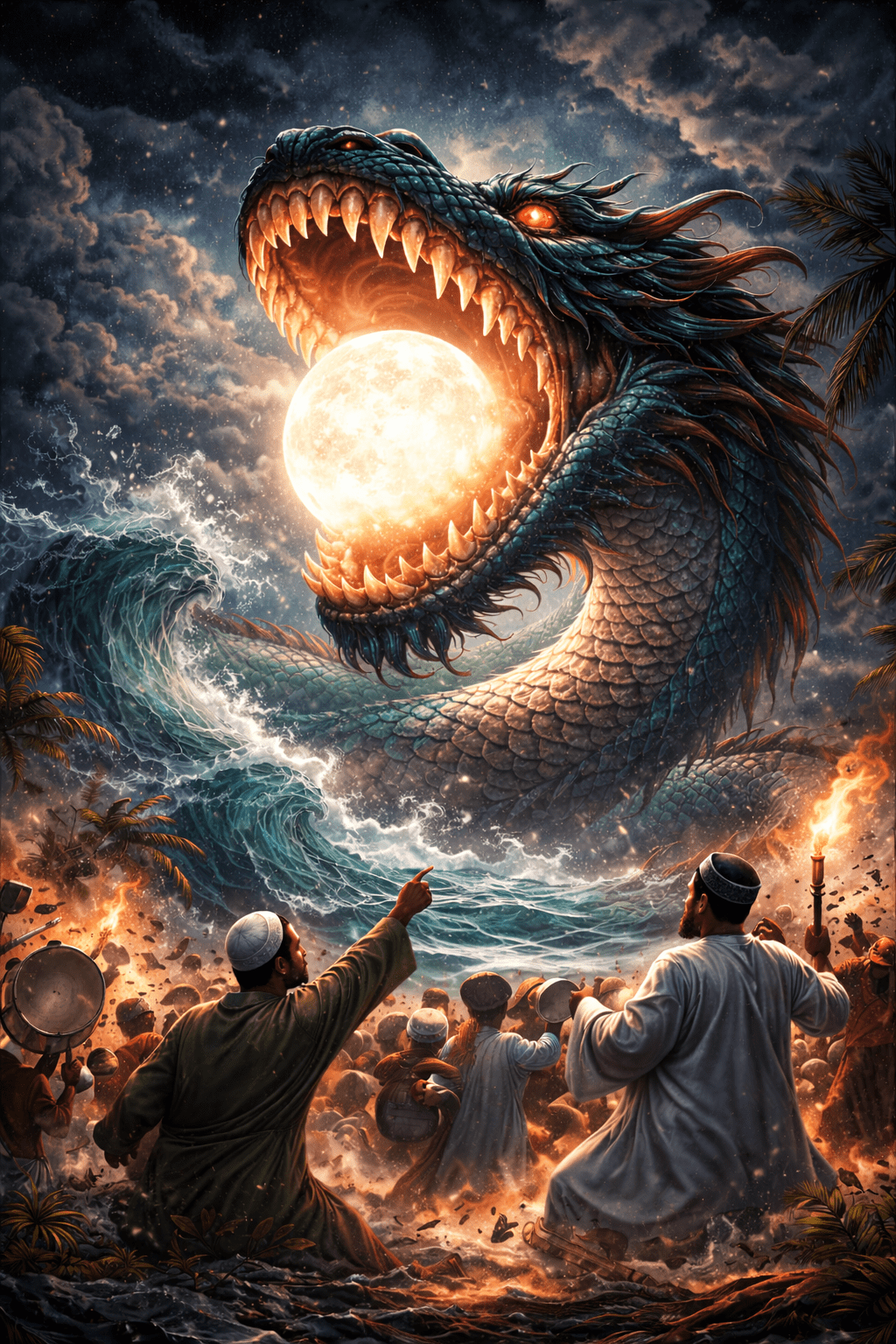
The Cagsawa Ruins are the remains of a Franciscan church rebuilt in 1724 and later buried during Mayon Volcano’s catastrophic eruption on February 1, 1814, one of the deadliest in Philippine history. The disaster destroyed the town of Cagsawa and killed more than a thousand people, many of whom had taken refuge inside the church. Today, only the bell tower and fragments of the structure survive, serving as a stark reminder of nature’s power and the resilience of local communities.
Set against the near-perfect cone of Mayon—one of the country’s most active volcanoes and a major tourism symbol—the ruins have become among Albay’s most visited destinations and a key cultural and historical site managed by the local government and the National Museum.
Festival Season and Renewed Tourism Momentum
Daraga is marking Cagsawa Festival 2026 throughout February, featuring cultural shows, sports events, culinary activities, and artistic presentations that celebrate local heritage and resilience.
The January visitor surge also comes as Mayon’s recent unrest—while prompting precautionary evacuations—continues to draw public attention to the volcano and its surrounding cultural landscape, where tourism and disaster awareness coexist.
With festival activities underway and visitor interest rising, local officials hope the momentum will translate into sustained tourism growth for Daraga and the wider Albay province—anchored on a site where history, tragedy, and natural beauty meet. (Biklish News Desk)


Leave a comment