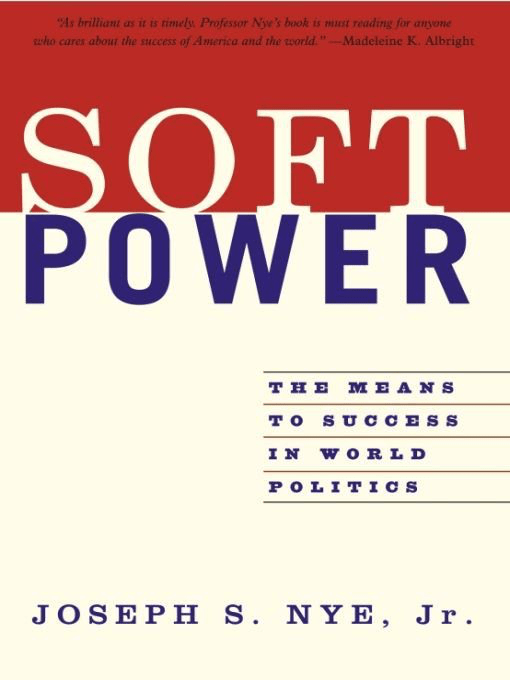
When I started reading Soft Power: The Means to Success in World Politics by Joseph S. Nye Jr., I expected theories on diplomacy, geopolitics, international relations. The usual.
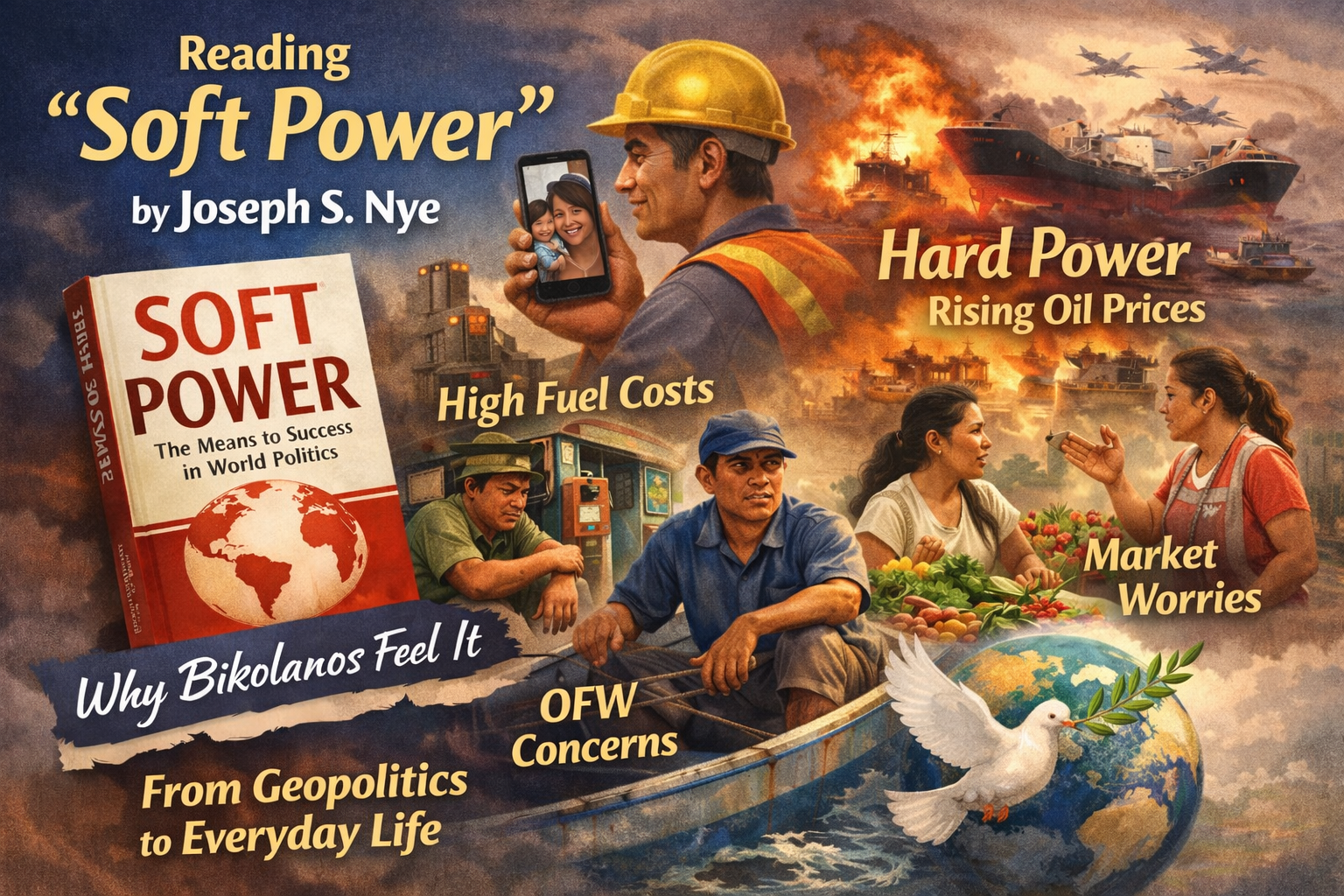
But after just a few chapters, something clicked: the book is not really about superpowers — it’s about ordinary people. Including, surprisingly, the Bicolanos. That is because when global powers choose force over persuasion, the first people to feel it are not diplomats — it’s the jeepney drivers, fishermen, market vendors, and families waiting for remittances from OFWs.
Nye’s Simple but Powerful Idea
Nye argues that countries don’t only influence others through hard power — military force or economic pressure. They also shape outcomes through soft power — attraction, credibility, trust, and legitimacy.
In simple terms, “Hard Power” says “Do this — or else...” while “Soft Power” says “You want to do this because you trust me”.
It sounds abstract — until you look at what happens during conflicts like the current tensions in the Middle East involving the U.S., Israel, and Iran.
From Missiles to the Gas Pump
When tensions escalate in the Middle East, oil prices move. When oil prices move, transport costs in Bicol rise. Suddenly:
- Jeepney fares increase
- Fishing trips become more expensive
- Delivery costs go up
- Food prices follow
A war thousands of kilometers away becomes a daily budgeting problem in Legazpi or Naga.
This is what Nye means. When countries rely heavily on hard power, they may achieve immediate military goals — but they also create instability that ripples across the world. Soft power, on the other hand, reduces friction and builds cooperation, making the global system more predictable.
The OFW Reality
This hits even closer to home for Bikolanos because many families depend on OFWs, especially in the Middle East. When tensions rise:
- Parents worry about safety
- Remittances become uncertain
- Deployment slows
- Families delay plans
I remember conversations in many Bicol communities where one family member works abroad. A geopolitical crisis is not just news — it’s personal. It’s about tuition fees, construction of a small house, or capital for a sari-sari store.
Soft power, in this sense, is not just diplomacy. It’s stability. And stability protects families.
Big Guns, Weak Charm
Right now, the world is seeing a lot of hard power — military signaling, deterrence, escalation. But what’s interesting, and very Nye-like, is that many countries are not lining up enthusiastically. Europe calls for restraint. Asian economies worry about oil. Others emphasize diplomacy.
This suggests something Nye repeatedly highlights: You can have overwhelming military strength and still struggle to win hearts.
Iran, meanwhile, gains some sympathy in certain audiences by portraying itself as resisting pressure. But sympathy is not the same as attraction. Few countries want to emulate Iran’s system. So what we see is not a soft-power victory for Iran — just a momentary narrative advantage.
No one is really winning the charm contest.
A Lesson for Leaders — Global and Local
One thing I appreciated about Nye’s book is how transferable the idea is. It applies not only to countries but also to communities.
A mayor who forces decisions may get compliance.
A mayor who builds trust gets cooperation.
A national government that escalates militarily may get short-term leverage.
One that builds legitimacy gets long-term support.
The same principle applies whether you’re running a superpower — or a barangay.
Why Bikolanos Should Care About Soft Power
Because when soft power weakens globally:
- Fuel becomes expensive
- OFWs become vulnerable
- Food prices rise
- Local economies feel the strain
When soft power is strong:
- Conflicts de-escalate
- Trade flows smoothly
- Oil prices stabilize
- Families breathe easier
In other words, soft power is not just about diplomacy. It’s about everyday life.
Final Thoughts
Reading Nye’s Soft Power made me realize that influence is not always loud. Sometimes, it’s quiet. It’s built through trust, credibility, and cooperation.
Missiles grab headlines.
But legitimacy shapes outcomes.
And for Bikolanos — whether at the gas pump, at sea, in the market, or waiting for remittances — the difference between hard power and soft power is not academic. It’s practical. It’s personal.
Because in the end, big guns may dominate the battlefield, but strong charm keeps prices stable, protects OFWs, and makes life more predictable.




Leave a comment