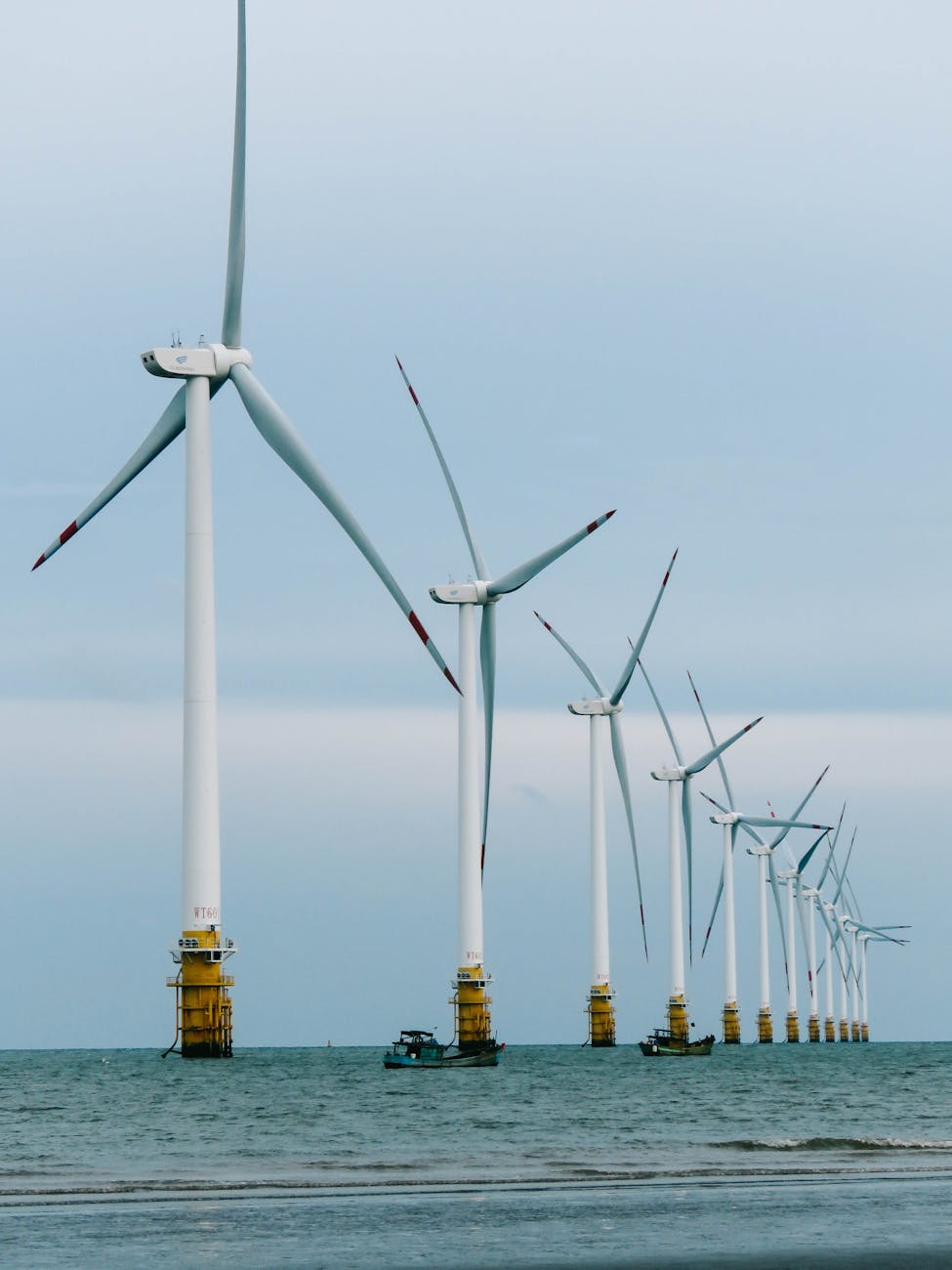
Mercedes, Camarines Norte is known for the sea—boats, seafood, island hopping. But suddenly, it’s being talked about in a very different way: offshore wind.
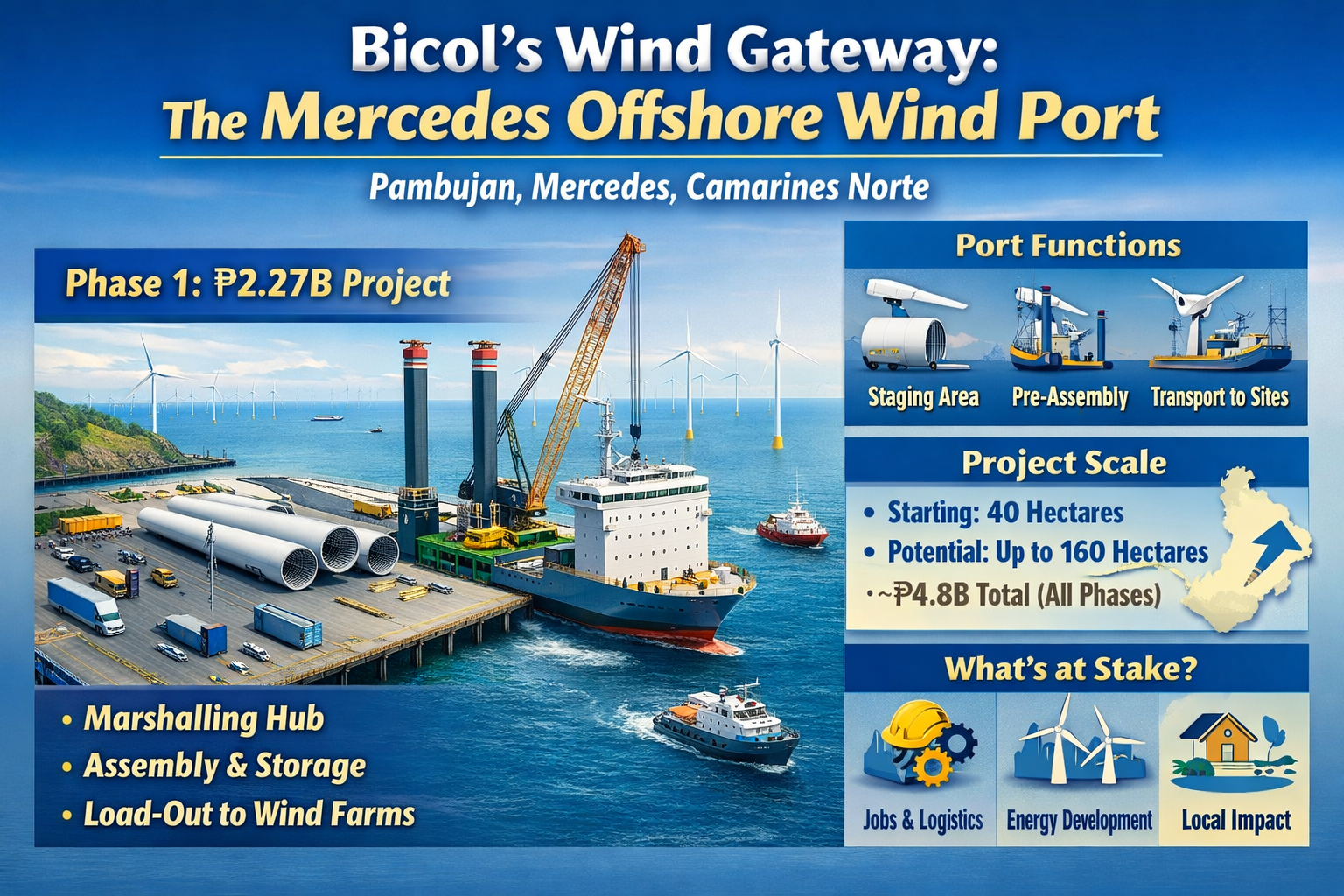
The Philippine Ports Authority (PPA) has awarded the first contract to develop an offshore wind service port in Mercedes, CamNorte, starting with a ₱2.27-billion Phase 1 project. Translation: this is not your usual port repair. This is big-ticket, big-impact, “national energy story” stuff.
So what is an “offshore wind port,” and why should we care?
Think of offshore wind as “windmills, but in the ocean”—and not the cute kind. We’re talking massive towers, blades, and equipment that don’t fit in a normal truck-and-crane setup.
That’s where the port comes in.
A specialized offshore wind port is basically a staging and loading base—a place where huge wind components are delivered, stored, and loaded to vessels going to wind farm sites. BusinessWorld describes Mercedes as being positioned as a marshalling port, with potential for future manufacturing.
So yes, if you hear “marshalling port” and you feel like you’re reading a Star Wars manual—same. But it matters because: no proper port = slow offshore wind rollout.
Who got the deal?
According to BusinessWorld’s report (based on PPA statements), Phase 1 was awarded to a joint venture: Khan Kon Chi Construction and Development Corp. and SB Construction Corp.
Why Mercedes?
Because the Philippines is trying to move offshore wind from “idea” to “actual electricity.”
- The Department of Energy’s GEA-5 is expected to auction 3,300 MW of fixed-bottom offshore wind, with delivery targets around 2028–2030. Meaning: we’re already in the “we need support infrastructure” era.
- And yes, offshore wind potential has been framed as massive—World Bank and DOE once highlighted the Philippines’ offshore wind potential and a roadmap for scaling up capacity over time.
So, if government wants offshore wind to happen, ports like Mercedes become the backstage crew—unseen, but crucial.
How big is this really?
Phase 1 is already ₱2.27B. But earlier reports (late 2025) also talked about Mercedes’ Pambujan/Pambuhan port area being planned at around 40 hectares, with possible expansion up to 160 hectares, and cost estimates reaching around ₱4.8B across development phases.
In short: Phase 1 is just the opening act.
If this is executed properly, Mercedes could benefit from:
- Construction jobs (the immediate “trabaho now” impact)
- Port operations jobs later (logistics, handling, warehousing, services)
- A small ecosystem of suppliers (hauling, metal works, fabrication support, food provisioning, repairs)
- A new identity: CamNorte as energy logistics hub, not just coastal tourism
Not bad, right?
What to watch (para dai sayang ang ₱2.27B)
As reality checks, we need to watch out for the following:
Timeline pressure. Some reports have floated ports being ready by early 2027 and similar aggressive timelines for offshore wind support facilities. If deadlines slip, costs can creep.
Utilization risk. A port can be “state-of-the-art,” but if offshore wind projects get delayed, the port can end up underused—and then people will ask: “So para saan talaga ‘to?”
Procurement and change-order danger zone. Anything with billions invites the usual questions — scope clarity, milestones, cost movement, and quality control. This is where transparency becomes non-negotiable.
4) Local impacts
More heavy equipment means more traffic, more coastal activity, possible fishery concerns—stuff that needs coordination and mitigation, not just ceremonial hard hats.
Bottom line
Mercedes is being positioned as a key piece of the Philippines’ offshore wind puzzle. If offshore wind really takes off, Camarines Norte just got upgraded from “local port” to “national infrastructure asset.”
And if it doesn’t? Well… let’s just say Bicolanos have seen enough “big projects” that look good in photos but don’t deliver the promised progress.





Leave a comment