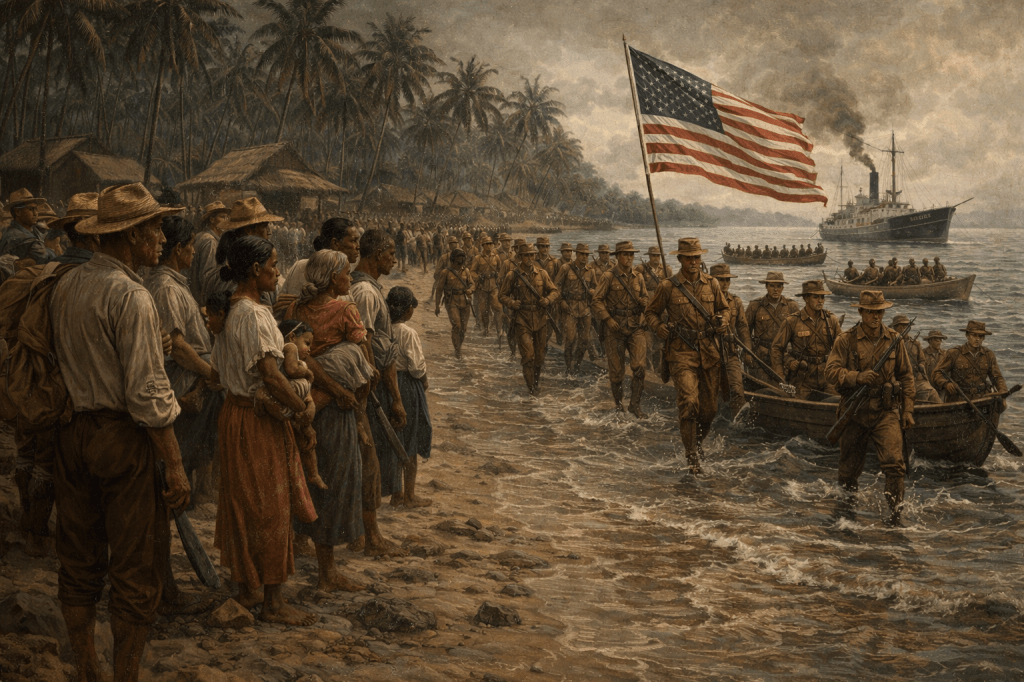
This day in Bicol history in 1900, an American steamer named Venus docked in Mercedes, Camarines Norte. The arrival was unopposed and from there the American troops moved toward Daet marking the start of formal American control in this part of what was then Ambos Camarines.
So the question practically writes itself: Was the lack of resistance cowardice, or mercy?
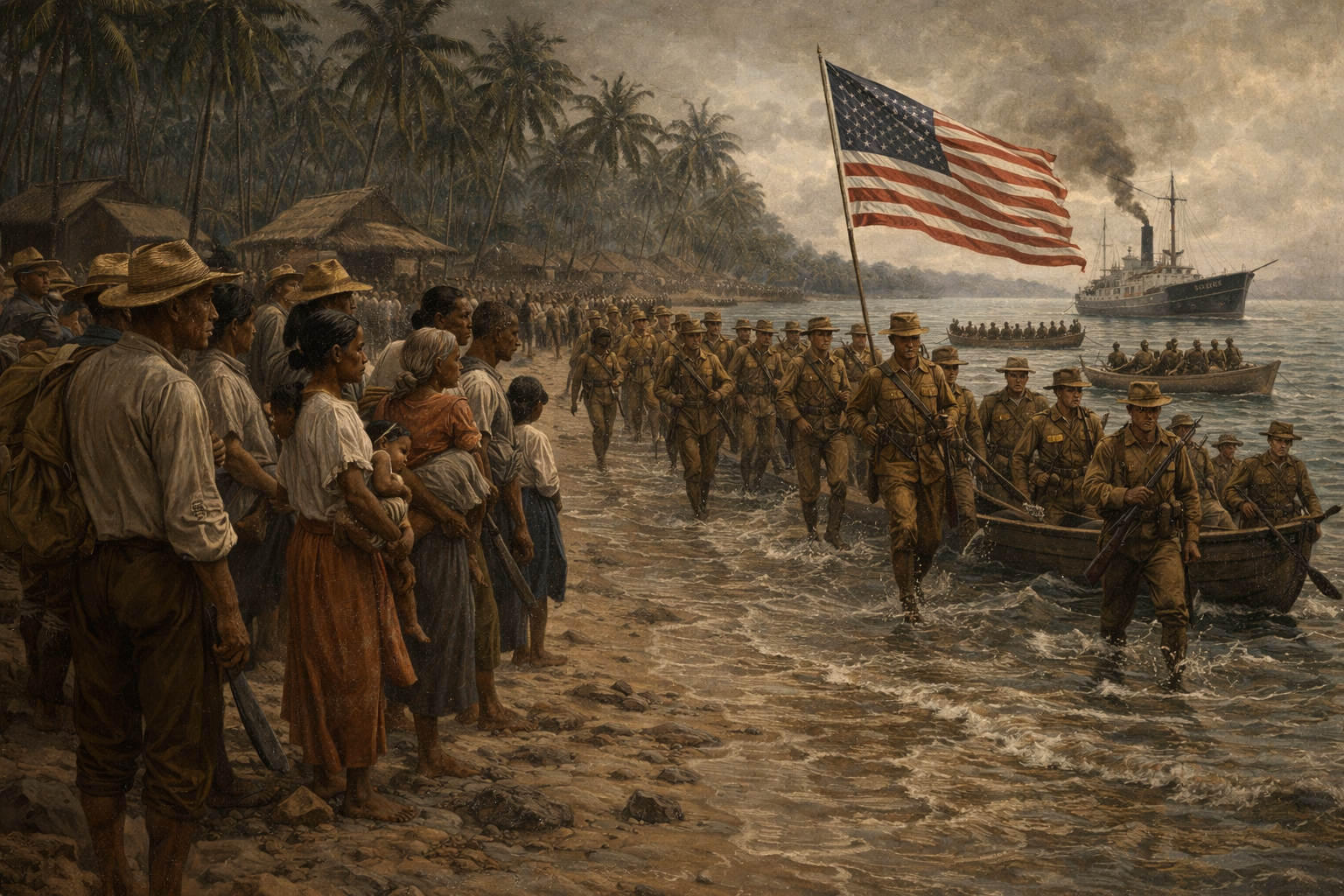
The problem with the word “cowardice”
Calling it cowardice assumes people had a clean choice: fight or fold.
But by early 1900, the Philippine–American War was already grinding on, and American forces had been expanding control across Luzon with superior arms, mobility, and logistics. In many places, “unopposed” didn’t mean “no resistance existed.” It often meant resistance was already weakened, scattered, negotiating, or pushed into guerrilla survival mode.
Even local summaries that mention the Mercedes landing frame it as happening when Bicol resistance was “almost quelled.”
If you were a local leader watching that steamer approach, you were not just choosing bravery. You were choosing the consequences:
- Would the town burn if you resisted?
- Would civilians pay the price?
- Could you actually win—or just prolong the inevitable?
Sometimes “no fight” isn’t lack of courage. Sometimes it’s a hard calculation made by people who live in the town, not just in history books.
The case for “mercy”
If surrender prevented a firefight in a coastal town with families, markets, boats, and homes clustered near the shore, then the “unopposed landing” can be read as a form of damage control.
One local history notes that after the Americans arrived and established control, civil administration followed, including the naming of a municipal president once civil government was set up. That shift—from soldiers to paperwork—is exactly how many “quiet takeovers” worked: the gun is present, but the real conquest is administrative.
And American records from the same period show troops being sent to reinforce the garrison at Daet, including scouting operations in the vicinity—suggesting the Americans still treated the area as an active security concern, even if the entry itself was smooth.
In that light, an unopposed landing can be less about cowardice and more about preventing Camarines Norte from becoming another “lesson town.”
But mercy for whom?
Here’s the uncomfortable twist: mercy is rarely free.
A “peaceful” transition can also mean:
- local power realigns quickly to whoever holds authority
- collaboration becomes the safest career path
- resistance goes underground, then gets criminalized
- ordinary people absorb new taxes, new rules, new language, new institutions
So the Mercedes landing isn’t exciting because it had explosions. It’s exciting because it forces an argument that still feels modern: When power arrives with overwhelming force, is refusal heroic—or reckless? When leaders surrender to prevent bloodshed, is it mercy—or opportunism?
Mercedes as the province’s “front door”
Today, Mercedes is known for boats and islands. In 1900, it was something else: a strategic doorway.
Ports decide history. A town with sea access can become the easiest place for a new regime to step in, establish presence, and move inland. And once Daet became garrisoned, Camarines Norte was pulled more firmly into the machinery of colonial administration—whether the people wanted it or not.
The real drama: what happened the next morning
The most cinematic moment isn’t the docking itself.
It’s the morning after—when people wake up and realize the flag has changed, and life must continue anyway:
- Who runs the town hall now?
- Who gets appointed, rewarded, watched?
- Which families adjust quickly—and which families become “suspect”?
- Which kind of courage survives: the courage to fight, or the courage to endure?
That’s why the March 4 landing matters. It’s not just a historical fact. It’s a moral crossroads—with no easy winners.





Leave a comment