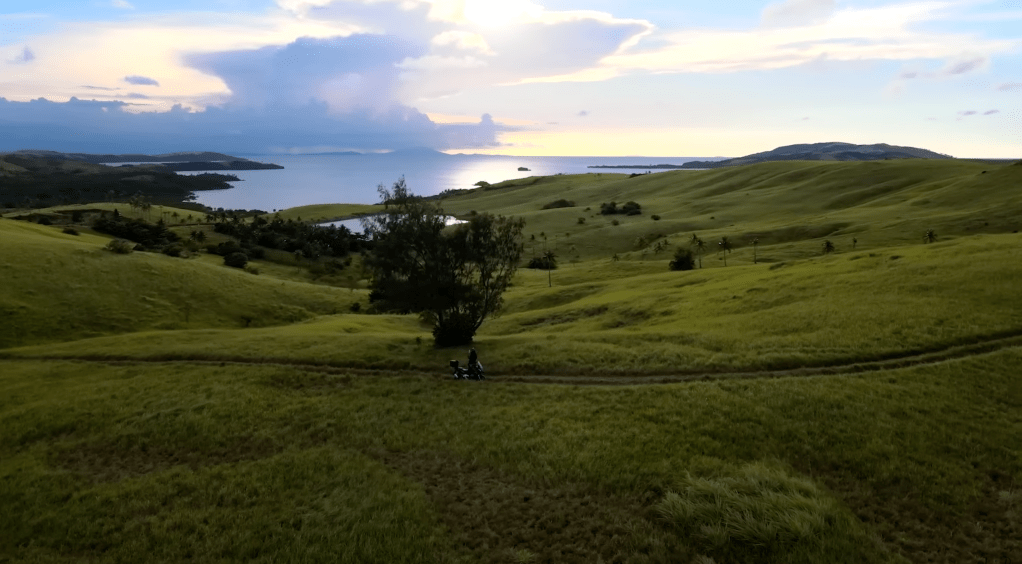
Siruma Was Logged. Then Settled. Now Fenced?
Siruma has always been a frontier.
First, for timber.
Then, for settlers.
Now, for land claims.
The headlines today talk about fencing and allegations. But the real story runs deeper — into rail tracks buried under soil, settlement proclamations issued in 1954, and land classifications that were never fully untangled.
If we want to understand the present, we have to look at the layers.
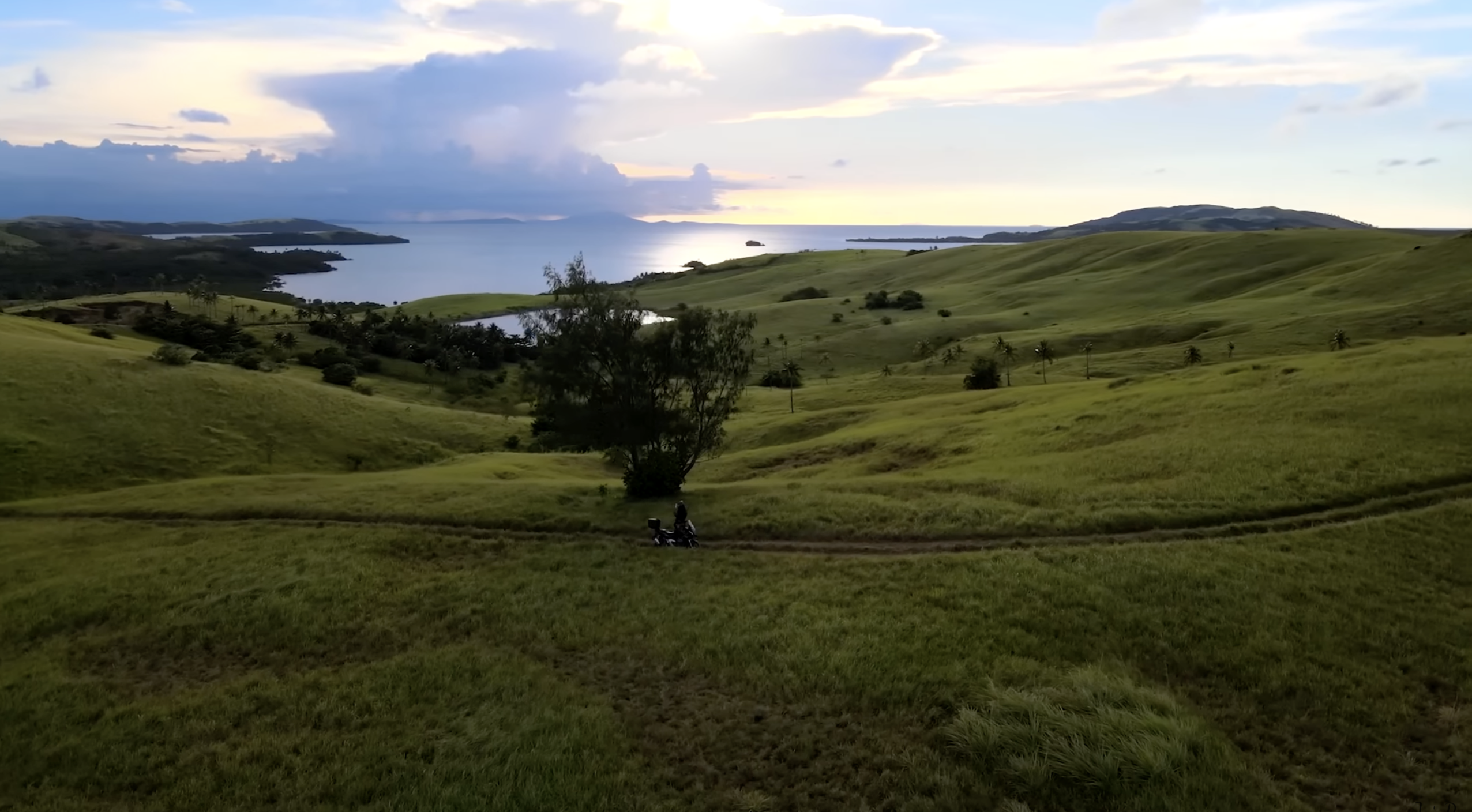
Layer One: The Timber Frontier
In the early 1900s, parts of Siruma and nearby Tinambac were logging zones. Hardwood too heavy to float downstream were transported using rail systems that connected forest interiors to processing sites and ports.
Research by Meyer-Lorey and Acabado (2024) documents how American-era logging operations in the Bikol region used rail transport to move timber. Local historical accounts from Tinambac describe how the Cadwallader-Gibson Lumber Company constructed rail tracks in the 1920s to haul massive logs toward Tandoc, Siruma.
By 1949, industrial activity in Tandoc had grown enough that the American Chamber of Commerce Journal reported the inauguration of a plywood plant there operated by Woodworks, Inc.
Siruma was not just forest.
It was part of an industrial timber economy.
Layer Two: Settlement
In 1954, President Ramon Magsaysay issued Proclamation No. 90, reserving lands in Tinambac and Siruma for settlement under the National Resettlement and Rehabilitation Administration (NARRA).
The goal was redistribution and rural development.
But here is the legal complexity:
Much of upland Philippines, including parts of Camarines Sur, has historically been classified as timberland, meaning part of the public domain unless formally reclassified or titled.
So Siruma became layered:
• Former timber concessions
• Settlement reservations
• Public domain forest classification
• Informal occupation
• Agricultural expansion
Extraction did not automatically create ownership.
Settlement did not automatically create title.
Layer Three: Conversion
From the 1960s onward, forest areas across the Philippines were gradually converted into farms and settlements. National studies by CIFOR and FAO show how commercial logging combined with agricultural expansion significantly reduced forest cover during the 20th century.
Siruma followed that broader trajectory.
Forests became farms.
Frontiers became barangays.
Land use changed faster than land records.
Classification often remained timberland on paper — even when communities had long been living there.
And in Philippine land governance, classification determines power.
Is it timberland?
Alienable and disposable?
Ancestral domain?
Privately titled?
These distinctions shape who can sell, who can fence, who can protest.
2026: The Fence Era?
Today, Siruma faces controversy.
Reports say large tracts of land have been fenced. Some residents allege land grabbing. A lawmaker has called for investigation. Other officials deny wrongdoing.
As of now, these remain allegations, not judicial findings.
But the tension is not new.
Siruma has long been a frontier space where land classification, occupation, and economic interest intersect.
When land values rise and classification remains unresolved, conflict often follows.
And What About Daldagon Peak?
If Daldagon Peak is part of the current issue, the key questions are technical and legal:
• What is its official land classification?
• Has it been reclassified?
• Are there overlapping claims?
• Is it part of the public domain?
• Is there ancestral domain coverage?
Without clarity, narratives collide.
And in places with layered histories, fences can quickly become symbols of deeper governance gaps.
The Pattern
Siruma’s story follows a familiar Philippine arc:
Timber → Settlement → Conversion → Consolidation → Conflict
The rails disappeared.
The forests thinned.
The settlers stayed.
The titles blurred.
The fences appeared.
Understanding Siruma’s past does not prove wrongdoing today.
But it explains why land in Siruma is never just land.
It is history layered upon history.
And unless classification, titling, and transparency are clarified, the frontier cycle may continue.
References
American Chamber of Commerce Journal (1949). Report on the inauguration of Woodworks, Inc. plywood plant in Tandoc, Siruma.
CIFOR (2006). One Century of Forest Rehabilitation in the Philippines.
FAO (2009). Philippines Forestry Outlook Study.
Lawphil (1954). Proclamation No. 90, Reserving Lands in Tinambac and Siruma for Settlement Purposes.
Lawphil (1954). Republic Act No. 1160 (NARRA).
Meyer-Lorey, R., & Acabado, S. (2024). Manifest Destiny in Southeast Asia: Archaeology of American Colonial Industry in the Philippines, 1898–1987. American Antiquity.
Tinambac Municipal Government. History of Tinambac.






Leave a comment