DARAGA, Albay — A proposed ₱3-billion food terminal in Barangay Talahib, Daraga is being pitched as a game-changer for farmers and fisherfolk not only in Daraga, but across Albay’s 2nd District and nearby LGUs—a facility envisioned to cut post-harvest losses, improve farm-gate prices, and turn Bicol into a more resilient food supply corridor.
The food terminal concept was first proposed by the residents of Bgy. Talahib after the Barangay Development Planning through Participatory Resource Appraisal (BDP-PRA) in 2021 when the late Gerry Jaucian was then the mayor. Unfortunately, it gained no traction due to fund limitations. The agreement was to tone the project to an agro-econonic zone.
Eventually, 2nd District Representative Caliy Loria picked it up and is now supporting the public’s clamor. The 20-hectare project is now dubbed as “Albay 2nd District Food Terminal” or “Loria’s food terminal.”
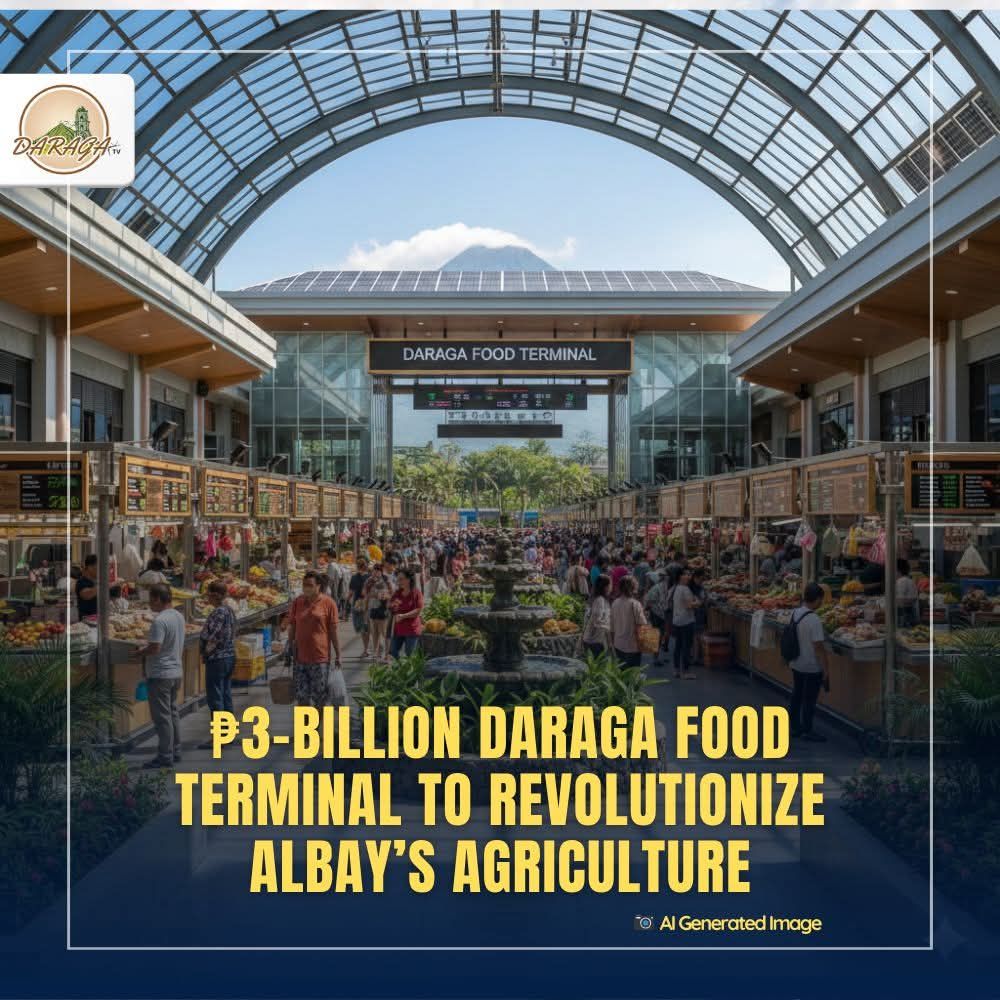
But the project also carries a clear sign it is being framed within the Department of Agriculture’s (DA) broader food-hub agenda: local government communications on the plan say a DA briefing/presentation on the “Food Hub sa Daraga” was held on January 16, 2026, followed by an ocular visit.
What farmers could gain
If built as envisioned, the terminal would function as a central trading and logistics hub where producers can move goods more efficiently to markets in Legazpi and beyond—reducing spoilage and time pressure that often forces farmers to sell cheaply.
For farmers from Daraga and neighboring municipalities, the key benefits would likely come from three features often highlighted in modern food-hub models:
- Cold storage and consolidation, to reduce waste and allow better timing in selling
- Processing/packing and value-adding, to raise product value and reach higher-end buyers
- Bagsakan-style market access, to shorten the chain between producers and consumers
Those features mirror the DA’s stated direction nationwide: building more food hubs specifically to address farmers’ logistics constraints and prevent spoilage and wastage.
The funding question: what’s known and what isn’t
Local posts repeatedly cite the ₱3-billion figure, but an official public breakdown of funding for the Daraga terminal is not yet clearly published in the same way as some DA-backed hubs elsewhere.
What is clear is that the DA has publicly discussed specific funding envelopes for food hubs in other areas—most notably stating it would allot ₱500 million each for food hubs in Pili, Camarines Sur and Manolo Fortich, Bukidnon.
That matters for Daraga because it suggests the likely funding “buckets” the project could be tapping or aligning with—such as DA appropriations and food-hub programming—while district-level champions work to secure inclusion, partnerships, or complementary investments.
A “gamble,” because execution will decide everything
A ₱3-billion terminal can either become a true backbone—a place where prices improve because logistics and bargaining power improve—or it can become another big-ticket facility that underdelivers if governance is weak.
For Daragueños and nearby farming communities, the make-or-break issues are straightforward:
- Who exactly will fund and own/operate the terminal (DA/FTI/LGU/PPP mix)?
- How will farmers be organized and prioritized (allocation rules, fees, access)?
- Will the facility have real buyer linkages (institutional buyers, wholesalers, hotels, exporters)?
- Can it stay running through typhoons, power issues, and supply disruptions?
For now, Daraga has a public vision, a DA briefing dated January 16, 2026, and a rising expectation among farmers that a “food backbone” could finally be built where value is kept closer to the people who produce it.





Leave a comment