At first glance, the unfinished flyover in Barangay Malabog, Daraga, looks like an accidental extension of the Cagsawa Ruins—a lone pillar standing stubbornly in the open, almost tourist-worthy in its stillness.
But then you see the steel rebars, exposed to sun and rain.
And the illusion breaks.
This is not history. This is not heritage. This is a milking cow—only it’s made of concrete, and not shaped like a cow.
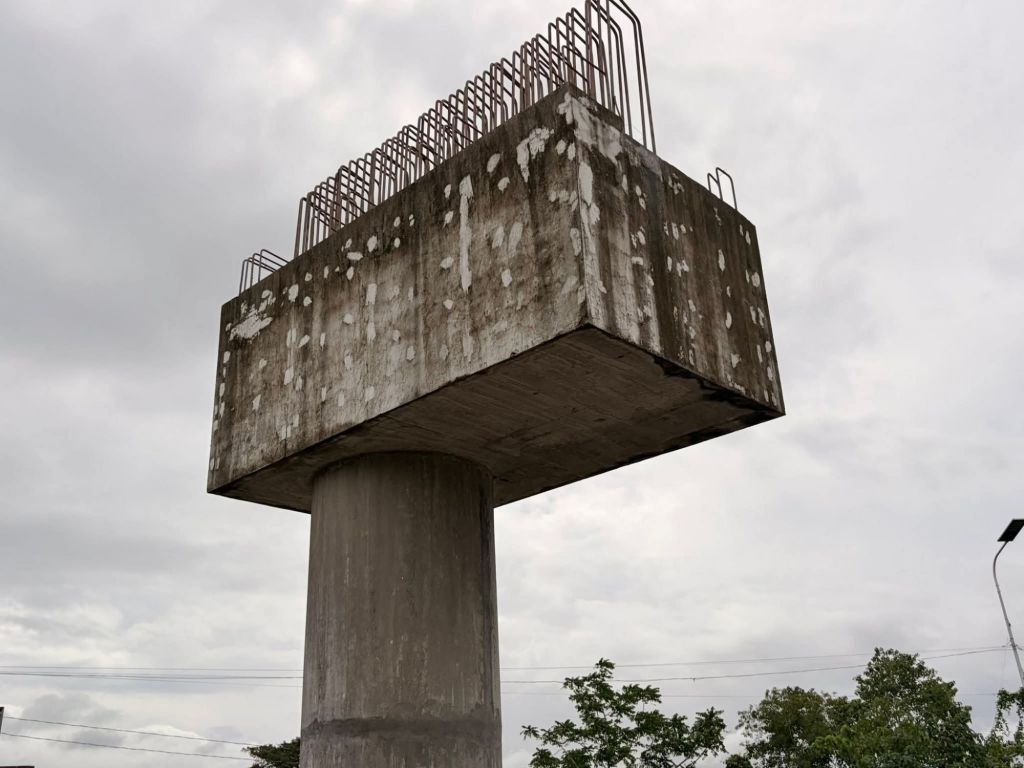
Concrete That Never Crosses
In Philippine public works, the most profitable projects are sometimes the ones that never get finished. A stalled structure becomes a standing excuse: for extensions, variations, re-alignments, and “additional funding.” The longer it stands incomplete, the longer it can be milked—quietly, legally, and repeatedly.
What remains for the public is a pillar that goes nowhere and a road that never arrives.
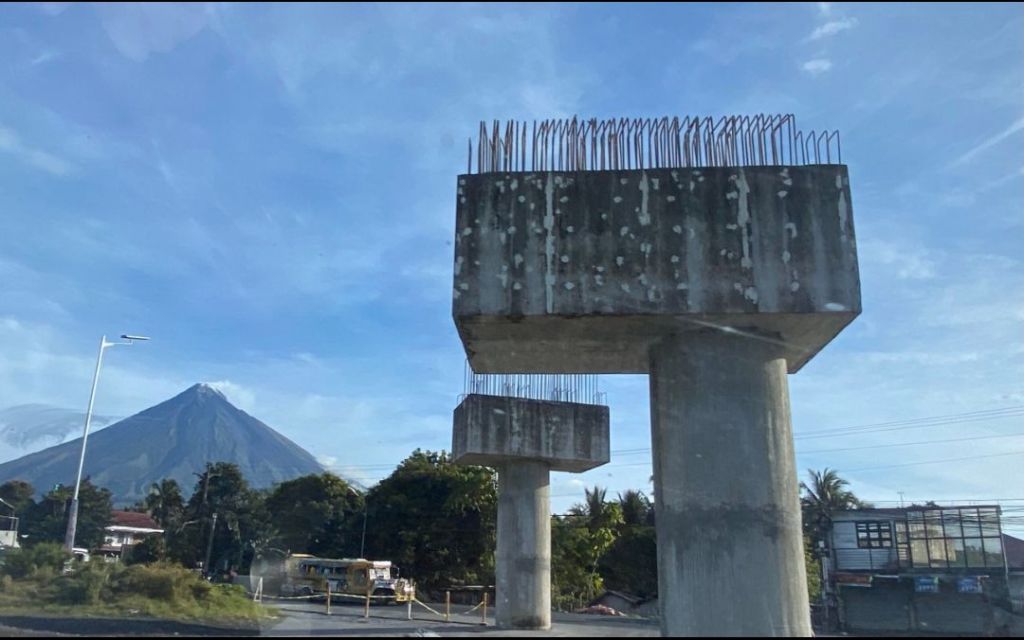
Inspections Are Not Accountability
Recently, Vince Dizon, Secretary of the Department of Public Works and Highways (DPWH), inspected the unfinished Malabog Flyover alongside Noel Ebriega Rosal, Bicol RDC Chair and Albay Governor, and Khadaffy D. Tanggol, Director of DPWH ROV.
Inspections matter—but only if they lead somewhere. Standing before an unfinished structure is not reform. It does not explain delays, account for funds, or impose consequences. Without those, inspections become optics, not solutions.
When “Resilience” Becomes a Cover
Bicolanos are often praised for being resilient. After every typhoon, eruption, or flood, the narrative repeats: strong people, brave communities.
But resilience has been weaponized. It is used to ask citizens to endure what should never have happened in the first place—unfinished projects, delayed services, and infrastructure that fails when it is needed most.
Resilience is not perseverance for inutile leaders.
It is not silence in the face of incompetence.
And it is certainly not learning to live with concrete excuses.
Infrastructure Is About Recovery Time
A flyover in Daraga is not ornamental. In a disaster-prone province, infrastructure determines:
how fast people evacuate,
how quickly goods move,
how soon livelihoods recover,
how effectively emergency services respond.
An unfinished project lengthens recovery. It increases risk. It turns every calamity into a longer, harder climb back.
Accountability Is the Only Real Resilience Policy
If resilience is the goal, the question must change. Not “How resilient are the people?” But “Why did this project stall—and who allowed it?”
Real resilience demands: clear explanations for delays,
public accounting of every peso,
penalties for contractors who fail,
consequences for officials who look the other way.
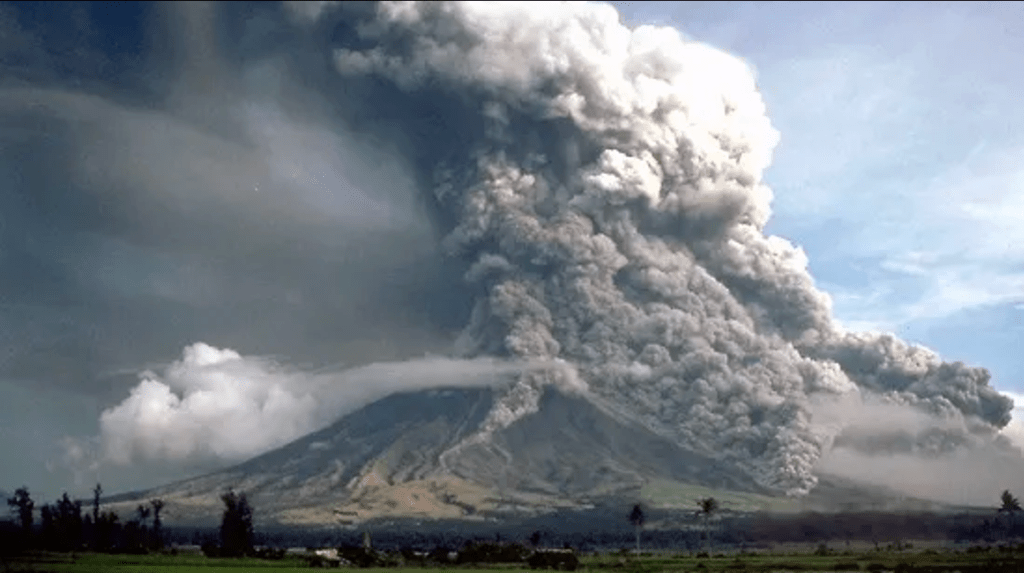
Cagsawa’s pillar stands as a reminder of nature’s power and history’s scars.
Malabog’s pillar risks becoming something else entirely: a reminder that corruption, too, can leave ruins—slowly, deliberately, and paid for by the public.
This is not a story of resilience.
It is a story of accountability denied—and why we can no longer afford to confuse endurance with good governance.





Leave a comment