Hori man daw at magaling, Horibata pa rin… este, hori pa man din.
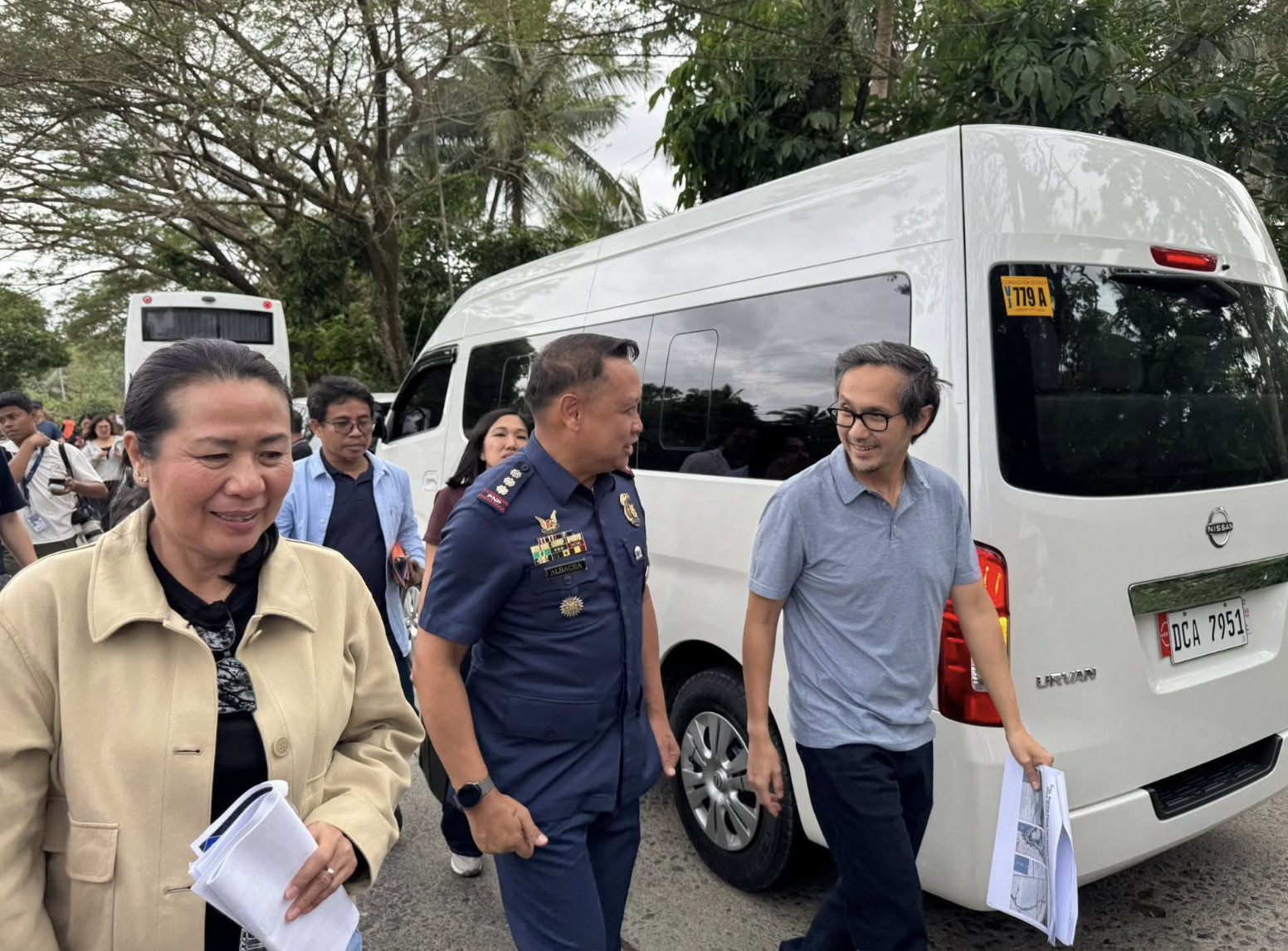
Public Works Secretary Vince Dizon didn’t just “visit” Bicol. He took a bus ride from Quezon to Bicol, felt the punishment firsthand, and then announced that DPWH regional and district offices should hold off on repair implementation and pause procurement for Maharlika Highway works until there’s a master plan—because the usual patch-and-pray routine is exactly how we got here.
And that, right there, is the political sting, a slap if you may call it, something our plane-loving politicians could have felt — only that theirs is “maibog ang apog”. Because if it takes a Cabinet secretary’s road trip to say—out loud—that the “segment-by-segment, pa-isa-isa” approach is broken, then the question isn’t only “Bakit sira ang kalsada?” The question is: Bakit ngayon lang ito naging obvious, when Bicol has a full roster of elected pressure points in Congress? And the road has been there since the time eternal? Bicolan resilience? Ambot!
The quiet insult in a loud announcement
Dizon’s messaging is pretty clear:
- Stop the piecemeal constructions. Consolidate funding across segments. Remember the flood control scam budgets where there are Phases 1, 2 ,3 and “G”? The more the budgets, even though smaller, the more chances of earning, err, winning — sabi ngani sa pa-raffle. (And by the way, start na naman daa kan jueteng operations ha, lalo na digdi sa may Albay.)
- Use bigger, more capable contractors (and even consider opening it up to foreign contractors), because the “one tiny segment per small contractor” approach invites uneven quality and perpetual seams.
- The “massive rehabilitation” is positioned as a 2026 priority with an initial cost estimate floating around ₱16 billion, and framed as something the country hasn’t done end-to-end since Maharlika was built decades ago.
All fine. All necessary.
But it also reads like this: “We have been letting you live with mediocrity.” And that’s why Bicolanos reacted strongly online. People don’t just hear “rehab.” They hear “So you knew this needed a reset. You just kept feeding it Band-Aids.”
Why this is a wake-up call for Bicol politicians
Let’s talk representation, not romance.
Bicol has 16 district seats in the House of Representatives. Sixteen lawmakers. Sixteen chances—every budget season, every hearing season, every time a road collapses before its “design life”—to demand answers, conditions, and accountability.
And it’s not like Bicol has zero presence in oversight spaces. For example, Ako Bicol’s Zaldy Co headed the Appropriations Committee in the Lower House. So did the Andayas. And Joey Salceda when he was Congressperson as well as Chiz Escudero both earlier headed Oversight Committees in the Lower and Upper Chambers, respectively.
Bicol Saro party-list Rep. Terry Ridon is publicly listed as Chair of the House Committee on Public Accounts, which is literally tasked with scrutinizing audit reports and agency performance versus what appropriations authorized.
So the implication of the Dizon visit is unavoidable:
If the situation is so bad that DPWH had to freeze local-level works and centralize the plan, then what were our political representatives doing while Bicolanos were doing slalom around potholes?
This is not to say all Bicol lawmakers are lazy or useless. That’s not the point. The point is structural:
- A district representative is not a project endorser.
- A district representative is supposed to be a pressure point—a sustained, annoying, data-driven pressure point—on national agencies.
When a secretary has to turn that pressure into a public spectacle (“Sumakay kami, grabe ang lubak”), it can feel like a slap, because it exposes what representation should have delivered as routine governance: predictable standards, predictable accountability, predictable consequence.
The “Band-Aid economy” — and who benefits from it
Dizon’s comments about moving away from small, segmented contracting aren’t just technical whining. They hint at a system that rewards repetition:
- Small segments = more packages
- More packages = more bidders
- More bidders = more room for weak performance hiding behind paperwork
- Weak performance = more “repairs” next year
- And “repairs” next year = more packages again
Congratulations: you’ve invented the Band-Aid economy. It doesn’t fix roads. It fixes cashflow—for everyone except the commuter.
So when DPWH says it wants to consolidate funding and go bigger, it’s not just engineering reform. It’s also a disruption of a comfortable political ecosystem.
And here’s the uncomfortable mirror for Bicol politicians: if the Band-Aid economy thrives in your districts, how loudly have you demanded it stop?
The real implication: This is a test of political maturity
Dizon’s road trip is not the ending. It’s the beginning of a test—especially for Bicol’s elected officials.
Because a “massive rehab” announcement is easy. The hard part is boring:
1) Will procurement actually change—or just pause?
“Pause procurement” can mean: “We’ll plan better.”
Or it can mean: “We’ll pause now, then resume the same thing with a new press release.”
What to watch: a published, time-bound master plan; clear segment priorities; and procurement that aligns with that plan—not with political calendars.
2) Will there be consequences for repeat failure?
If a segment fails long before its expected life, the story shouldn’t end at “may ginagawa naman.” The story should include: Who built it? Who accepted it? Who paid for it? Who keeps winning anyway?
That’s where congressional oversight should shine—especially committees that can force audit attention and performance scrutiny.
3) Will the “big rehab” survive the next wave of excuses?
The Philippines has a seasonal religion called Reasonable Delay. Its saints include: weather, right-of-way, “dadaan pa sa proseso,” and “kulang ang pondo.”
But DPWH itself is framing this as a two-year push (this year and next) with consolidated funding and tapped savings. If that’s the commitment, it should be trackable like a scoreboard.
A challenge to Bicol’s lawmakers: don’t clap—own it
The easiest political response to Dizon’s visit is gratitude posting: “Salamat Sec, nakita mo rin!”
Sure. But if Bicol’s leaders only clap when a secretary arrives, they accidentally confirm a painful narrative: “Reform happens to us, not because of us.”
The higher standard is this: local politicians should treat Dizon’s visit as leverage, not as rescue.
- Call for a public master plan briefing in Bicol.
- Require DPWH to publish clear quality specs and acceptance standards.
- Demand a blacklist policy for chronic underperformers.
- Push for enforcement against overload and axle violations that destroy roads faster than rain does (because trucks don’t care about your campaign tarpaulin).
That’s the “wake-up call” part. Not the photo.
If this works, other LGUs can copy the political playbook
Here’s the good news: if the Dizon reset actually sticks—master plan, consolidated funding, higher standards, capable contractors, and real accountability—it becomes a template that other regions and LGUs can emulate:
- Stop rewarding patchwork (budget fragmentation is not a virtue).
- Make performance visible (plan + milestones + public updates).
- Make failure expensive (contractor consequences; acceptance discipline).
- Make oversight routine (not a crisis reaction).
Because every province has “the road that never ends.” Bicol just happens to have one that’s nationally famous.
The punchline Bicol deserves
Dizon’s road trip wasn’t just inspection. It was an unsolicited performance review for everyone who claims to represent Bicol’s interests.
And the grade, at least on the roads question, looks like this:
“May attendance. Kulang sa follow-through.”
Now the ball is in Bicol’s court—especially its 16 district lawmakers—because once the DPWH secretary has publicly admitted the patching game is over, the only truly embarrassing outcome is if we still end up… patching.





Leave a comment