The uproar over the condition of the Andaya Highway has again put Camarines Sur in the national conversation—and not in a flattering way. Netizens accuse 1st District Rep. Tsuyoshi Anthony Horibata of “doing nothing,” while Horibata counters that improvements have been undertaken during his term.
But are the two parties correct? Or they both claims miss the deeper point?
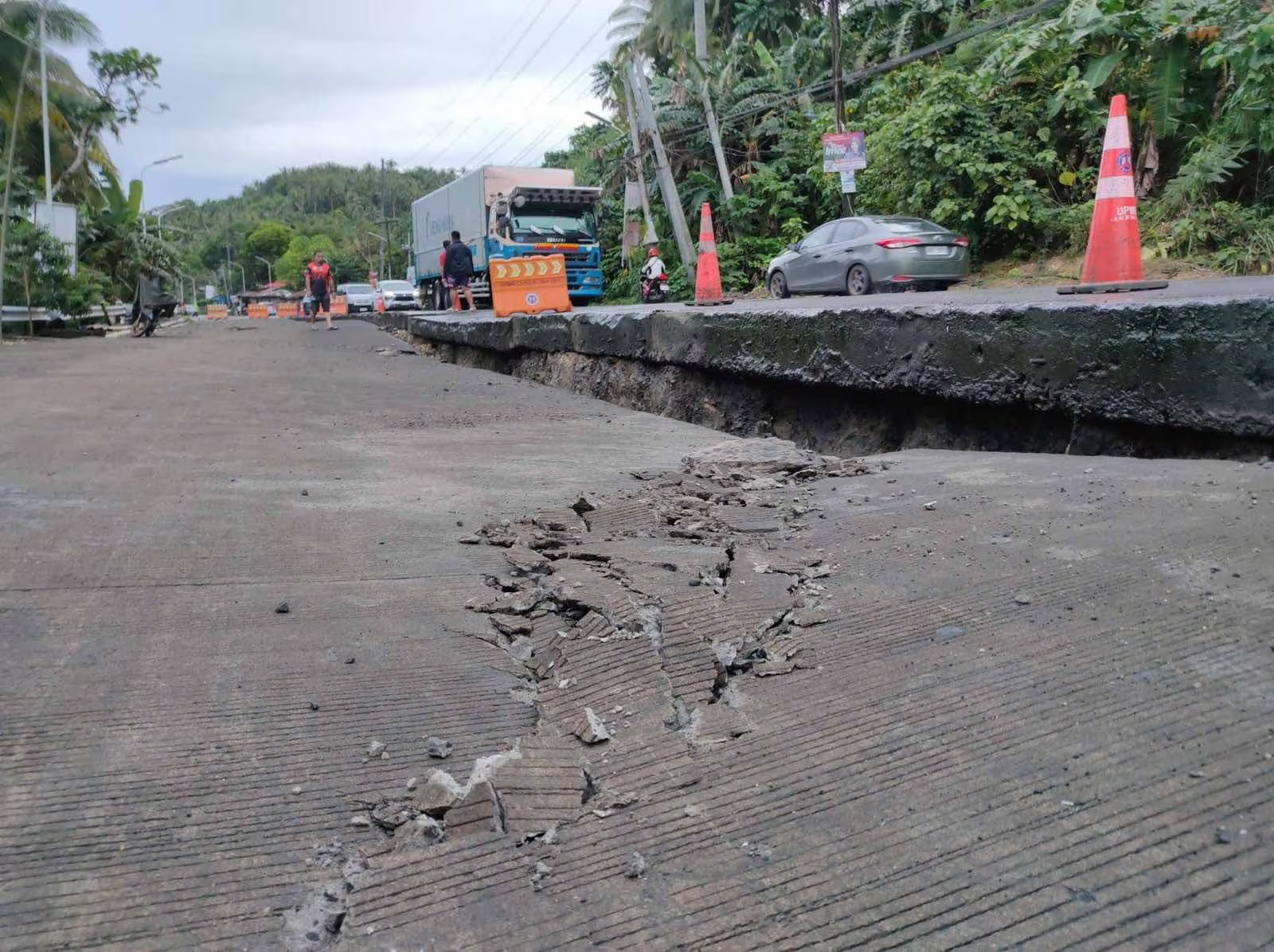
The problem with the Andaya Highway has been existing for ages. Do the politicians in the region think it is a “ghost problem”, or just another “cash cow”?
Horibata and the local politicians claim, however, that with their love for the people of Camarines Sur, efforts are being done to repair the road. Indeed, they may have loved the people of Camarines Sur but, as Patty Smyth said, “Baby, sometimes love just ain’t enough”. There may be repair projects but the Andaya Highway continue to fail because projects alone do not equal governance.
The wrong debate: concrete vs. complaints
For years, public discussion has revolved around visible outputs—repaving, widening, patching, and resurfacing. These are easy to photograph, inaugurate, and list in accomplishment reports. But Andaya Highway keeps deteriorating not because engineers forgot how to build roads, but because the system surrounding the road is broken.
A road that carries heavy trucks, high traffic volume, and inter-provincial cargo flows cannot be treated like a barangay access road. When design assumptions, procurement practices, enforcement of axle-load limits, and maintenance regimes are misaligned, failure becomes predictable. Fresh asphalt simply delays the next collapse.
Horibata’s defense—and why it falls short
Congressman Tsuyoshi Anthony Horibata has largely defended his record by pointing to existing or ongoing DPWH works. That defense may be technically correct—but it is also strategically insufficient.
A district representative is not merely a project endorser. He is supposed to be a pressure point on national agencies like DPWH. The real question isn’t whether road projects can be listed—it’s whether the congressman has used his mandate to demand designs that match real traffic loads and to insist on accountability when roads fail long before their intended service life. Just as important, he must exercise oversight on how agencies operate in the district—including pushing the consistent enforcement of anti-overloading rules so that trucks that exceed allowable limits don’t keep crushing the highway faster than taxpayers can pay for “repairs.”
Without these, “improvements” are nothing but cosmetics.
Governance failure, not engineering ignorance
DPWH already knows the problems:
- Heavy and overloaded vehicles accelerate pavement failure.
- Drainage and subgrade weaknesses worsen damage during the rainy season.
- Fragmented contracts lead to patchwork fixes instead of corridor-wide resilience.
Yet these realities rarely translate into safeguards that stick. Why? Because enforcement is weak, incentives are misaligned, and political pressure is sporadic. When no one is held accountable for premature road failure, rebuilding becomes routine—and profitable. Take note: In practice, District Representatives can, and always ask, for the replacement of District Engineers if these are not performing well. If the DE is not performing well and is not replaced, either something is wrong with the Congressional District Representative, or he/she is using the wrong metrics. A usable and comfortable road, or more projects that fattens the pockets (at least of the contractors)?
This is where governance comes in. A functioning governance system makes it more expensive to fail than to do things right. On Andaya Highway, the opposite seems true.
What leadership should look like
If Andaya Highway were treated as a governance issue, the agenda would look very different:
- permanent and enforced axle-load controls, not selective crackdowns;
- performance-based maintenance contracts tied to road condition, not just project completion;
- public transparency on costs, variations, and defect-liability enforcement;
- corridor-level planning instead of isolated project segments.
These are not engineering miracles. They are political and institutional choices.
Stop blaming the road
Netizens are angry because they experience the same damage year after year. Politicians respond by pointing to new layers of concrete. Both sides talk past the real problem.
Andaya Highway is not collapsing because asphalt is weak. It is collapsing because governance allows it to fail repeatedly—without consequence.
Until politicians and District Representatives stop defending projects and start fixing systems, Andaya Highway will remain what it has long been: a very expensive lesson in how bad governance turns public infrastructure into a revolving repair fund.
Politicians always profess the love for their constituents. But with the decades-long problem like the Andaya Highway, it is just apt to use the line from Black Eyed Peas, “Where is the love?”






Leave a comment