Are Bicolanos more “Southeast Asian” than the rest of the Filipinos?
Nestled in the southeastern part of Luzon in the Philippines, the Bicol Region offers a culinary experience that distinctly echoes the flavors of Southeast Asia. A recent visit to countries like Indonesia, Malaysia, and Thailand revealed a striking similarity – a shared love for the fiery zing of chili. This characteristic sets Bicolano cuisine apart from other regional cuisines in the Philippines, which are generally less spicy and more influenced by Spanish, American, and Chinese culinary traditions.
In Bicolano cuisine, chili is not just an add-on; it’s a central feature. Dishes like Bicol Express (usually made of pork slices, coconut milk, and lots of chili peppers), and Pinangat (taro leaves cooked in coconut milk) are testament to the region’s love affair with this fiery ingredient. This preference for heat aligns closely with Southeast Asian cuisines, where chili is used extensively, not only for its spice but also for its depth of flavor.
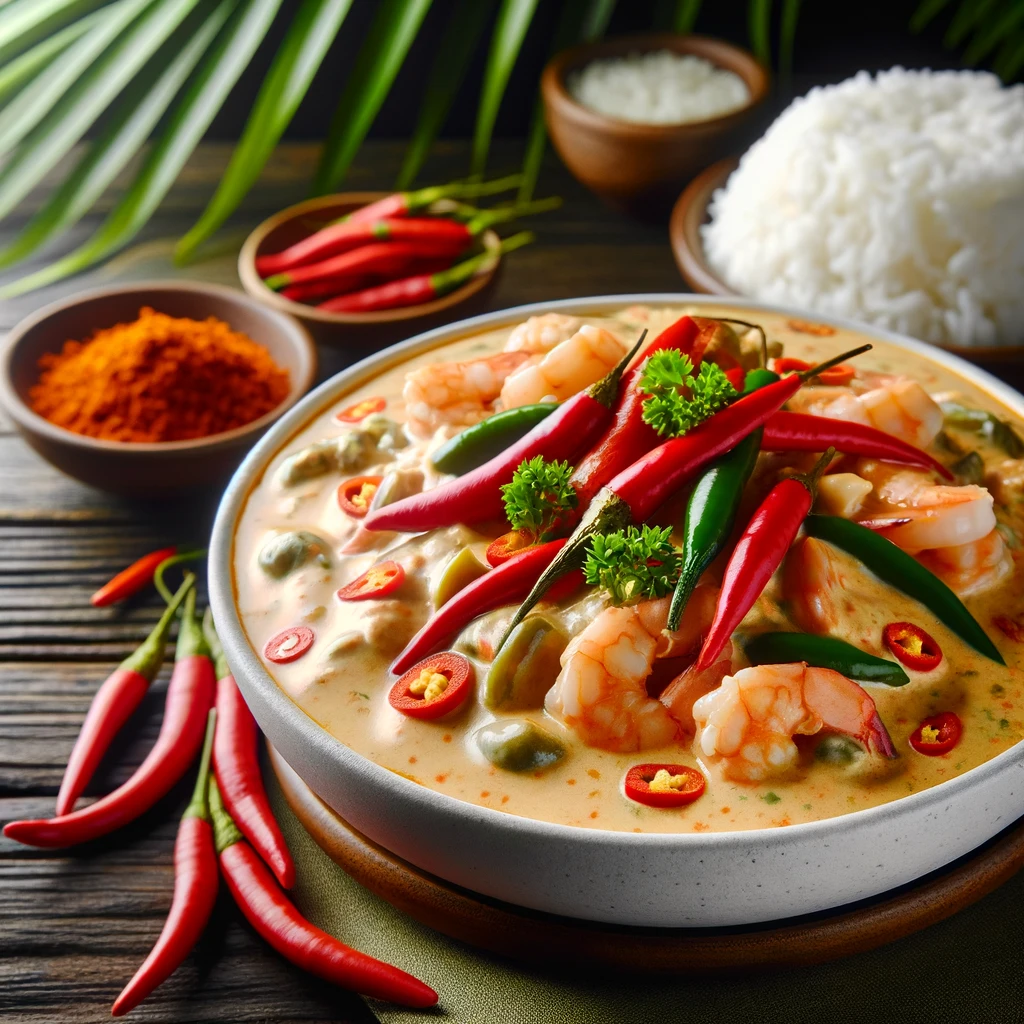
Another culinary common thread is the use of coconut milk. In Bicol, this ingredient transforms dishes into creamy, rich delights. This is similar to how coconut milk is used in Thai curries or in the rendang of Indonesia and Malaysia, adding a velvety texture and balancing the heat of the chili.
Bicol’s volcanic soil, particularly around the Mayon Volcano, is perfect for growing chili peppers, just as the fertile lands of Southeast Asia are. This abundance naturally results in a culinary tradition where chili is a staple ingredient. Moreover, the tropical climate of the region supports the growth of coconut trees, making coconut milk readily available.
While there are similarities in ingredients and flavors, the historical and cultural contexts of Bicolano cuisine are unique. Filipino cuisine has been shaped by a complex history of colonization and trade, resulting in a fusion that is distinctly Filipino. Bicolano dishes, while sharing Southeast Asian traits, are also infused with Spanish, American, and indigenous influences.
Modern Bicolano chefs are taking these traditional flavors and reinterpreting them in innovative ways. This includes fusion dishes that incorporate Southeast Asian techniques and ingredients, further bridging the culinary gap between Bicol and its Southeast Asian neighbors.
A Spicy Melting Pot
Bicolano cuisine, with its robust use of chili and coconut milk, shares a flavorful bond with Southeast Asian cuisines. This connection is a reminder of the shared agricultural and cultural landscapes of the region. However, Bicolano dishes retain a unique identity, deeply rooted in the Philippines’ diverse culinary history. This makes the cuisine not just a representation of Southeast Asian flavors but also a showcase of the rich, multifaceted tapestry of Filipino culinary artistry.






Leave a comment